I would be late to the party if I were to suggest that Nicolas Cage has been on a roll these past few years. This is not to suggest that the Nic Cage famous for apparently taking any role (not true, he has said) is gone; in the past five years, he has appeared in twenty-four films, most of which were not critically well-received. But some of the highlights of this "renaissance" part of his career have seen him play an eclectic group of characters, from his voice work in Spider-Man: Into the Spider-Verse, to the gonzo violence of the arthouse horror flick Mandy, to his odyssey-like quest to find his kidnapped pig in Pig.
Surely his newest film, The Unbearable Weight of Massive Talent, a film he (in further proof that he doesn't take every role) turned down numerous times, would be included here. Why wouldn't it? For one, it's a unique role and acting challenge, for he's not playing an alienated man on a quest or another version of Spider-Man. Here, he plays...Nicolas Cage, a highly exaggerated version of his highly exaggerated acting style. Beyond that, it's a performance and film that have been eaten up by critics and regular viewers alike; despite underperforming at the box office, its Rotten Tomatoes Tomatometer and Audience Score are at eighty-six percent and eighty-seven percent, respectively. I really wish I could consider myself one of the many fans of The Unbearable Weight of Massive Talent, but alas, I am not.
The film, directed and co-written by Tom Gormican, is undoubtedly a love letter to Nicolas Cage, a man whose Hollywood career is among the most unique, most eccentric, most roller-coaster-like, so much so that it's difficult to write about in a succinct way. At any rate, Cage looks like he's having a blast. How could he not? One gets the impression most Hollywood actors do in fact like satirizing themselves. Cage hilariously did so ten years ago on Saturday Night Live, appearing alongside Andy Samberg, who also played an irate "exaggerated screaming psychopath" version of Cage as the real Cage sat next to him and tried to calm him down by complimenting him.
Cage sort of gets a second chance at making fun of himself here. The Nicolas Cage as a character in this film is a man who can't act particularly well, and he takes "his craft" so seriously that his opining about his methods makes him snobbish and a bore. For some reason not explained, he also talks to himself—I mean, a much younger version of himself named Nicky. Nicky looks kind of like Cage did in his Red Rock West era of the early 1990s. In fact, the filmmakers based this alternate personality of Cage on his bizarre appearance in an interview in 1990 with Terry Wogan, the one in which he tossed money to the audience and took off his shirt.
In The Unbearable Weight of Massive Talent, Cage is in a rut. He can't get the roles he wants, and Nicky is pressuring him to remember that he's a movie star, not an actor. He does not have much of a relationship with his daughter (Lily Sheen), mainly because he does all the talking when they're together, like when he lectures her about what a great film The Cabinet of Dr. Caligari is. Desperate for a decent role and drowning in debt, he decides to throw in the towel and retire, until his agent (Neil Patrick Harris) convinces him to accept an offer from a Spanish playboy millionaire named Javi Gutierrez (Pedro Pascal) to be the guest of honor at Javi's birthday party in Majorca.
Hesitant at first, Cage eventually accepts and travels to meet Javi. Initially unnerved at some of Javi's eccentricities, the two eventually become closer and closer, especially as they share their love of film (Javi, too, loves The Cabinet of Dr. Caligari, and he introduces him to the beauty that is Paddington 2) and passion to revamp Javi's screenplay (something about, according to Cage, "dueling Christ figures"), but eventually their new friendship is to be tested. Cage is contacted by two CIA agents (played by Tiffany Haddish and Ike Barinholtz), who inform him that Javi kidnapped a woman named Maria (Katrin Vankova), the daughter of a politician leading in the upcoming Catalonian election. (The subplot about the election is a bit convoluted, but few audience members will care.) Cage finds it difficult to believe that it is Javi behind this plot, and his brewing friendship with him further causes him to hesitate to help out.
As comedy would dictate, Cage eventually accepts, yet is terrible at his new job, nearly getting himself killed and barely able to do virtually any aspect of what is required of him, but he's the CIA's only shot at getting Javi. Things go from bonkers to absolutely haywire with every misstep, but he is sure to remind those listening to him that really, when you think about it, being a spy is not that different from being an actor. More fun at the insufferability of some actors.
It would be tempting to write that fans of Nicolas Cage would enjoy the film because, well, virtually everyone is a fan of him. Fans of his films will certainly be thrilled at the various references to his movies, with shout-outs to everything from Captain Corelli's Mandolin to The Rock to even Guarding Tess. However, The Unbearable Weight of Massive Talent is disappointingly unfunny, with most of the jokes aiming for cute references; in many respects, it's simply the same joke over and over again, with countless shout-outs to Cage's films and jokes about his acting and spending habits. What few laughs (or chuckles) are actually in the film are those that are provoked by Pascal. Cage may be the top star of this film and the one who's been criss-crossing the country to promote it, but Pascal is the one who is undoubtedly funnier. Though I was ultimately disappointed in the film, I will confess that I did find the bromance between the two to be charming.
When Ray Liotta passed away last week at the age of sixty-seven, virtually every publication labeled him as "Goodfellas star." Some of them might have also mentioned his supporting role in Field of Dreams as Shoeless Joe Jackson, but all of them mentioned Goodfellas, the iconic 1990 gangster flick directed by Martin Scorsese and co-starring Robert De Niro and Joe Pesci that made him a star. It got to the point that it almost immediately prompted Nick Schrager to write that "Ray Liotta was so much more than Goodfellas."
This is self-evident. The obituaries that did want to discuss more than Goodfellas or Field of Dreams likely mentioned motion pictures like Something Wild, Cop Land, Hannibal, Blow, Heartbreakers, Killing Them Softly, The Place Beyond the Pines, Marriage Story, and The Many Saints of Newark. Many of them mentioned Narc, as well, which is almost surprising given that it's probably the least-known of the films mentioned. Of his performance in Narc, Schrager wrote that Liotta's role was "a lead performance that remains one of his finest, full of ferocity, despair, and sorrow that so often defined his work." In Narc, Liotta was essentially as good as he had ever been in any of his more famous films.
His Henry Oak, a lieutenant detective obsessed with finding the killers of his partner, is crass, impatient, impulsive, violent, and terrifying, making him come across as an even more maniacal Popeye Doyle, which is quite the accomplishment. Narc expectedly contains a lot of arguing, crying, swearing, and bullets flying, which means it might not be for everyone. But the most realistic scene, and the one that features both Liotta and his co-star Jason Patric's best acting in the movie, is the moment they sit and talk about their wives. There is an intensity in Narc, even from the get-go, that might feel nauseating to many. But the quiet moments between Patric and the late Liotta are superb.
The film opens with Patric's undercover narcotics officer named Nick Tellis desperately chasing a drug dealer in Detroit. Even though the criminal is shot and killed, the shootout goes awry. Despite this, Tellis is apparently good enough of a cop to be given a second chance, this time trying to solve a murder case which has run into a dead-end. The case involves another undercover cop who was murdered. The police chief (Chi McBride) promises Tellis that if he secures a conviction, he'll get him his precious desk job. (Tellis is married and has a child, and his wife, played by Krista Bridges, has had enough of worrying about him every night.) The police chief has also decided to pair Tellis with Lieutenant Oak (Ray Liotta), despite the chief's warning to Tellis that Oak is a little unhinged.
All of the police work can feel a little berserk. The depiction of the police—whether they are to be seen as those who keep us safe or those who deliberately harm various communities—could certainly be in the eye of the beholder. Narc was released in 2002 (the same year as HBO's brilliant cop show The Wire), when public confidence in the police was at almost sixty percent; today, after years of high-profile and filmed murders by police officers, that number is under fifty percent. In 2002, one might have seen Liotta's fiendish cruelty as an accurate depiction of unchecked cops and their racist targeting of people of color. But others, particularly younger white male audience members, might have seen the stocky, bearded figure with piercing blue eyes and a menacing shotgun as a heroic figure of justice.
The screenplay by Joe Carnahan, who also directed the film, would have likely been better suited for a series, just as The Wire was. And its engagement in twists and turns is a little beneath it. However, its realistic dialogue and attention to detail are admirable, as is its incorporation of a Rashomon-style retelling of events. But what you'll really come away from the film is the performances of Jason Patric and, of course, Ray Liotta, who left us too soon. Narc is a fine example of his immense talent and a reminder of how much we lost with his passing.
By the time Mao Zedong died in 1976, the communist revolutionary had left behind a controversial and complicated legacy. His defenders (to this day) cite the improvements in literacy and life expectancy rates and defeating foreign powers like Japan, thereby helping to end the Century of Humiliation. On the other side of the coin, however, his policies led to the single deadliest famine in history (killing anywhere from 15-55 million people) and unspeakable and atrocious human rights violations.
After Zedong died, his successor (the reform-minded Deng Xiaoping) and other Communist Party leaders were in a bind: How were they to distance themselves and their country from the nightmarish horrors of the Mao era while also weaponizing his legacy for the sake of national cohesion? The answer was what remains the official government policy on the Mao era: Mao was seventy percent right and thirty percent wrong.
From my own experience in China, everyday people (especially younger people who have no memory of him, and definitely the young nationalists—nicknamed "Little Pinks"—revere Mao, including one who told me he wept when thinking about him) may accept the seventy-thirty face-saving narrative, but they focus mainly on the positive aspects of his legacy. The Blue Kite, however, most certainly does not. From 1993 and directed by Fifth Generation filmmaker Tian Zhuangzhuang, The Blue Kite focuses on a family's struggles during some of the darkest days of the totalitarian Mao era of the 1950s and '60s, especially during the Anti-Rightist Movement and the Cultural Revolution. For doing so, the film was initially banned in China, and Tian was ordered not to make another movie for ten years.
Starting in 1953 (on the day of Stalin's death), the film opens with a wedding celebration of the protagonist's parents (Pu Quanxin as his father and Lü Liping as his mother). Mao Zedong is not a character in this film, and he's hardly mentioned. Yet at the same time, his presence looms large. The newlyweds bow to his portrait during their wedding ceremony, but they are soon to embark on a life journey in which the policies of the man they just bowed to will forever change their lives in the worst ways. It will start in small ways, with their family growing disconnected ideologically, but eventually they will grow apart spatially by force, as well.
As we see these events unfold, The Blue Kite becomes increasingly emotional, mostly provoking feelings of sadness due to what is happening to the characters and anger because of why. Eventually, the protagonist of the film is born. His name is Tietou, which translates to "iron head." Tietou is played by several different actors in this coming-of-age drama, namely Yi Tian as an infant, Zhang Wenyao as a child, and Xiaoman Chen as a teenager. All of them are naturals, providing some of the film's best acting.
Tietou is a bit on the mischievous side, though not more than the average boy. His parents, though, at times struggle with him, and they both take their anger out on him. How can they not be angry all the time? Those were trying times. The mother, though, perseveres and would rather not dig up the past. "What's past is past," she says. "No need to think about it anymore." She's in good company: China would still prefer not to talk about the Cultural Revolution. But the memories pile up, whether she wants them to or not. Acquaintances are taken away to labor camps, and soon her son will join an angry mob of teenagers cutting their principal's hair to humiliate her in front of the entire student body. This may be too simplistic to say, but even though she's only in a few scenes, the government propaganda lady who parades through the village and demands perfect loyalty to the Party may be one of cinema's nastiest villains.
It would also be simplistic to say that Tian's filmmaking style is not as direct as a Westerner might expect, nor is it as overtly emotional. True, the characters emote; they cry, they laugh, they argue, they fight. But the film (perhaps because of the realities of making a film of such content, or perhaps because that isn't the filmmakers' style—I'm not sure) is not as preoccupied with such things, but this wouldn't hurt non-Chinese audiences' appreciation of the movie. Some audience members might be bored by it at times, or they might find it a little long-winded, but the film is essentially a humanist and universal story, one that doesn't need to be as explicitly direct in its politics. This is one of the ways in which it is noteworthy.
Thus, The Blue Kite, written by Mao Xiao, is a beautiful yet painful coming-of-age family drama. Tian and his team create a film that reflects the instability of Tietou's life with the instability of the times in which he lives. This unflattering portrayal of how bad things were is one of the reasons why the film was initially banned in China, but the blacklist against Tian only lasted two years, and he eventually returned to film directing in 2002. Despite the initial ban, The Blue Kite won awards at film festivals in Hawaii and Tokyo, and it was nominated at the Independent Spirit Awards. Kenneth Turan and Roger Ebert both placed it on their top-ten lists for 1994, the year in which films like Pulp Fiction, Hoop Dreams, and Forrest Gump also appeared. The Blue Kite continues to be cited along with Farewell, My Concubine and To Live as one of the greatest Chinese films of the era.
China is different these days. For one, it's an economic powerhouse and a major global power. But some things haven't changed. Films are still heavily censored. Mao is still quite popular, and the current leader, Xi Jinping (while not as totalitarian), is a something of a Mao wannabe. The Little Pinks patrol the web (at least what they're able to use if they can penetrate the Great Firewall) to battle any who criticize the government, but they're unlikely to turn their mother in for being disloyal, ending in her execution (which is something that actually happened). It is with sincere wishes when I say that I hope more films like The Blue Kite are made to help remind audiences that while China has a lot to be proud of given how far they've come and how much they've accomplished in such a short amount of time, the past is sometimes not simply past, and a cult of personality can have dire consequences.
Come hell or high-COVID water, the Oscars, despite avoidable controversy and the public's growing indifference, will carry on. For example (and while I can't exactly call this a cause célèbre, as that would imply that it was a widespread issue, which it surely isn't), one complaint is that the Academy has yet again changed its rules for Best Picture nominations. This time, we're back to the system used in 2010, so there are ten nominees (unlike last year's eight or 2020's nine). The only difference between this year and 2010 is that this year there is a guarantee of at least ten films, and while I'm all for more than five nominees (especially to help avoid a repeat of the 2009 controversy), mandating ten nominees ensures weak films (like Don't Look Up) and overrated ones (like Dune) get the prestigious nomination.
Most of the controversy over this year's ceremony, however, is due to the Academy's boneheaded decision to cut the live presentations of eight categories (documentary short, editing, makeup and hairstyling, score, production design, animated short, live action short, and sound) in a desperate move to try to improve their diminishing viewer numbers. (They apparently, though, feel that while there is not enough time to show all twenty-three categories, there is plenty of time to feature a performance of a certain annoying song that isn't even nominated.) If the Academy and ABC decided that this bizarre decision was a justifiable one in order to raise their viewing viewership, then the only decent thing to do would be to give them a dose of unintended consequences and not watch the actual show.
Beyond that, there were inevitably films that shocked everyone with their lack of nominations (namely Passing), and there were others that I thoroughly enjoyed but were somehow not nominated, such as arguably the best film of 2021: the documentary The Rescue about the Tham Luang cave rescue in 2018, directed by Oscar winners Elizabeth Chai Vasarhelyi and Jimmy Chen. How the film was not nominated is a giant mystery to me, although it does continue the Academy's streak of overlooking documentaries that people actually see and like, such as Won't You Be My Neighbor? and Hoop Dreams. Some of my other favorite films of last year, including Riders of Justice, Old Henry, and Bo Burnham: Inside, were nowhere to be seen on the list of nominees.
That being said, the Oscars are the Oscars, and they have continued, in some ways, to expose interested viewers to a wider range of films from around the world. Of all fifty-three nominees, some are good, some are bad, some are overrated, some are surprisingly great, and some are just what we needed. Here is my ranking of all fifty-three nominees for the 2022 Academy Awards:
53. Don't Look Up
Film Editing (Hank Corwin), Original Score (Nicholas Britell), Original Screenplay (Adam McKay, David Sirota), Best Picture (Adam McKay, Kevin Messick)
Goodness, how do this guy's movies keep getting nominated? Oscar-winner Adam McKay often aims for low-hanging fruit; in this case, it's an exhausting amount of targets, like the U.S. government and cable news and social media and the public's obsession with celebrities and a host of others. Yet he fails miserably, mainly because Don't Look Up is not nearly as clever as it or any of its supporters think it is. McKay used to write for Saturday Night Live, and yet there's not a single funny moment in this "satire," and with all the statuettes between its A-list stars that include Leonardo DiCaprio, Jennifer Lawrence, Meryl Streep, Tyler Perry, Mark Rylance, and Cate Blanchett, one would hope for something better. But much like McKay's previous Oscar-nominated dud (the Dick Cheney biographical flick Vice), Don't Look Up is overhyped, knackered baloney that thinks of itself as an intellectual masterpiece.
52. Coming 2 America
Makeup and Hairstyling (Mike Marino, Stacey Morris, Carla Farmer)
Everyone is happy that Eddie Murphy has had a comeback these past few years. But unlike his Emmy-winning triumphant return to Saturday Night Live just over two years ago, in which fresh updates made famous characters like Mr. Robinson and Velvet Jones not simply nostalgic fan service but intriguing mockery, Coming 2 America, another sequel to an 80s flick no one wanted, is dreadfully awkward and painfully unfunny. Despite the gang all being back again, it is disappointing yet not surprising that this was apparently the best that could be done. Like its predecessor, the film is nominated for its makeup design (the first one lost to Beetlejuice), but the way it looks (all caked on the actors) is as old-fashioned as the undoubtedly archaic jokes.
51. Free Guy
Visual Effects (Swen Gillberg, Bryan Grill, Nikos Kalaitzidis, Dan Sudick)
About halfway through Free Guy, Millie (the character played by Jodie Comer) tells Guy (Ryan Reynolds) that he's funny. Guy is surprised, and answers simply by asking, "I am?" Reynolds has been funny before in an eclectic career that includes The Proposal and the Deadpool movies, but there is nothing funny about his performance here in this flick about an NPC named Guy who suddenly undergoes a Groundhog Day-like experience of self-actualization. Taika Waititi as a wicked CEO or Joe Keery as a game developer aren't humorous, either. Unfortunately, Free Guy features likely the worst performances by Reynolds, Waititi, and Keery. The visual effects (the film's sole nomination) are neat, and Guy does get to use a lightsaber (right after a certain Avenger shows up), but other than that, there's nothing to like about Free Guy.
50. The Mitchells vs. the Machines
Animated Feature Film (Mike Rianda, Phil Lord, Christopher Miller, Kurt Albrecht)
An apocalyptic tale of a family (voiced by Abbi Jacobson, Maya Rudolph, Danny McBride, and a very annoying Mike Rianda as the young son) battling it out against the robots that have turned on them (as well as each other because of course it has to have its moments where they learn to love and accept each other again and blah blah blah), this is perhaps the most headache-inducing of all the films on this list (like pretty much anything Phil Lord and Christopher Miller are involved with), and other than Olivia Coleman's turn as a villainous and vengeful mobile phone commanding the robots in the war, there's nothing worthwhile here.
49. The Hand of God
International Feature (Italy)
The Hand of God, at least during the first seventy-five percent of it,is remarkably pointless, absurd, ridiculous, tedious, mean-spirited, and daft. For a country whose previous winners include The Bicycle Thief, 8 1/2, and Cinema Paradiso, it's disappointing that Italy's most recent nominees (this and the dreadfully dull The Great Beauty from 2013) have been so disappointing. The sole bright spot for the film is the noteworthy performances by Filippo Scotti and Luisa Ranieri. After tragedy strikes, the film gets marginally better as the protagonist deals with guilt and struggles to discover his identity, but it's not nearly enough for the film to crawl out of the massive crater it found itself in.
48. Affairs of the Art
Short Film - Animated (Joanna Quinn, Les Mills)
Affairs of the Art, a 2D hand-drawn animated film directed by Joanna Quinn (who is also the film's storyboard artist and lead animator), is very, very odd. I have no criticism towards its animation, which is able to more or less marry realism and fantasy in a welcomingly chaotic way. However, as a story, it's a drag, with constant commentary by her familiar protagonist Beryl (voiced by Menna Trussler), who yabbers non-stop about her unique family, punctuated with copious amounts of animated nudity and violence against animals. (If either of those two are for you, this film might be right up your alley.) This is the fourth Beryl film Quinn and Les Mills have created, and the fourth time might just be the charm for them (though I highly doubt it).
47. The Windshield Wiper
Short Film - Animated (Alberto Mielgo, Leo Sanchez)
Alberto Mielgo's website mentions that The Windshield Wiper is a very "personal and particular vision" about love and relationships. Particular indeed. My dislike for The Windshield Wiper is about the same as my dislike for Affairs of the Art, but whereas Affairs of the Art at least has a plot, no such thing exists here. The animation of The Windshield Wiper, however, is far more fascinating to look at. I just wish I was given more motivation to be invested in it. One cool fact about the film, though, is that it apparently influencedSpider-Man: Into the Spider-Verse, as Mielgo served as a production designer on the film and made The Windshield Wiper while working on it.
46. Cruella
Costume Design (Jenny Beavan)
So now we know why Cruella de Vil hates Dalmatians so much! In any kind of unwanted origin story, studios employ this kind of thing as justification for making these kinds of films, and it's almost always absurd. The vast majority of these remakes or origin stories by Disney have felt so forced and pointless; this one, about the early days of the infamous dog-hating villainess (played here by Emma Stone), is surely one of the most irritating. At any rate, Stone, Emma Thompson, and Paul Walter Hauser certainly commit to their performances with varying results, but Mark Strong just sort of stands there. Finally, there are a lot of great songs in the film's soundtrack, but they don't save the film. In sum: great costumes, great soundtrack, so-so acting, and no justification for existing.
45. House of Gucci
Makeup and Hairstyling (Göran Lundström, Anna Carin Lock, Frederic Aspiras)
Ralph Fiennes, the English actor who was nominated for an Oscar in 1994 for playing a German in Schindler's List (while speaking in a German accent), recently claimed that the era of native English speakers doing non-English accents in English-language movies was over. Ridley Scott and crew appear to disagree with him. In House of Gucci, the accents are...distracting, partly because there's so much inconsistency between the actors. Some of the actors (like star Lady Gaga) at least appear to be trying, while others sound like they are high school students in their senior-year play. The Scott-directed drama of the Gucci empire in turmoil is not a totally uninteresting account, although this cinematic telling of it is yet another two-hour-plus experience that is way too long and way too unnecessary. That being said, Jared Leto is unrecognizable, so perhaps its makeup and hairstyling design will win the film its sole Oscar.
44. Licorice Pizza
Best Picture (Sara Murphy, Adam Somner, Paul Thomas Anderson), Directing (Anderson), Original Screenplay (Anderson)
Licorice Pizza, the newest film written and directed by Paul Thomas Anderson,is certainly the most overrated of the ten Best Picture nominees. (Don't Look Up shouldn't be nominated either, but at least it wasn't a critical hit like Licorice Pizzasomehow was.) Licorice Pizza tells the story of a very toxic and creepy romance between a 25-year-old woman played by Alana Haim and a 15-year-old boy played by Cooper Hoffman (whose father, Philip Seymour Hoffman, was a frequent collaborator of Anderson's). The film marks the film debuts of both leads, and they do a pretty decent job (especially compared to some of the bigger stars who show up), but they are swimming in a mess of drivel that is Anderson's boring, pointless story.
43. The Eyes of Tammy Faye
Actress in a Leading Role (Jessica Chastain), Makeup and Hairstyling (Linda Dowds, Stephanie Ingram, Justin Raleigh)
Based on the 2000 documentary of the same name (which is probably considerably more interesting, as is this hysterical YouTube video featuring "the best" of Jim Bakker), The Eyes of Tammy Faye depicts the person who is likely the most sympathetic of the notorious 1980s televangelist superstars: Tammy Faye Messner. It's also one of this year's inevitable nominees that depicts a rags-to-riches tale of Americana, whether you asked for it or not. In this case, Jessica Chastain as Tammy Faye does an impressive job belting out Christian tunes. Other actors in the film also are effective, like Cherry Jones as Tammy's disapproving mother and Vincent D'Onofrio as Jerry Falwell, who disapproves of Tammy's support of gay men suffering from AIDS. Andrew Garfield, though, as Jim Bakker overdoes it (as he often does). Chastain's recent wins at the SAG and Critics Choice awards and the fact that she hasn't won an Oscar yet likely makes her the frontrunner for Actress in a Leading Role.
42. Luca
Animated Feature Film (Enrico Casarosa, Andrea Warren)
I watched Luca, the raved-about Pixar film about an Italian boy sea monster (or something) this past summer, and I remember almost nothing about it. Like many of the films on this list, I really wanted to enjoy Luca a lot more than I did, but for me, 2021 was a disappointing year for animation (for both short films and full-length ones). None of my favorite films of the year were animated, including this coming-of-age crowd pleaser. I am, however, happy for queer people who have responded to the increased representation they've seen in films like The Mitchells vs. the Machines and Luca (even if it's only implied inthe latter, and despite Disney head Bob Chapek's cowardly response to Florida's recent homophobic laws).
41. CODA
Best Picture (Philippe Rousselet, Fabrice Gianfermi, Patrick Wachsberger), Adapted Screenplay (Siân Heder), Actor in a Supporting Role (Troy Kotsur)
I really, really wanted to like CODA, the story about a hearing teenage girl (Emilia Jones) who is a child of deaf adults (CODA), especially because of the need to tell more stories like this. Much of my disappointment came from the over-the-top acting. Marlee Matlin (the Oscar-winning actress who also is a producer of the film) as the girl's mother is good, but Troy Kotsur as the father, while providing a very humanist portrayal of a man determined to keep his family fishing business afloat (while simultaneously embarrassing his daughter in front of her crush), delivers a performance that often is very annoying. (I guess that's the point, since, like many fathers, he revels in embarrassing his daughter.) But the most vexatious of them all is Eugenio Derbez as the protagonist's music teacher. It is quite possibly the most irritating acting in the whole film and definitely in the top ten worst performances of a teacher.
40. Being the Ricardos
Actress in a Leading Role (Nicole Kidman), Actor in a Leading Role (Javier Bardem), Actor in a Supporting Role (J.K. Simmons)
Predictably, like Judy and a host of films before it, Being the Ricardos features a lot of that boring nonsense nobody wants in a biopic, mainly flashbacks that add nothing, for example. In this case, those flashback scenes include a solid twenty minutes, and even without them the film would be too long and stale. The film, written and directed by Aaron Sorkin, had potential, especially because its opening contained so much of that zazz that people have always (or usually) liked in Sorkin's writing. His script, while employing a few eye-rollable liberties, appears exhaustingly researched, and presents (or reminds) viewers of an oft-forgotten fact of Lucille Ball: that she was one of the many victims of McCarthyism and HUAC's anti-Communist crusade. Despite the film's noble intentions and fine performance by Nicole Kidman as Ball, watching this movie is an experience that will likely inspire you to frequently glance at your watch.
39. Dune
Best Picture (Mary Parent, Denis Villeneuve, Cale Boyter), Production Design (Patrice Vermette, Zsuzsanna Sipos), Sound (Marc Ruth, Mark Mangini, Theo Green, Doug Hemphill, Ron Bartlett), Adapted Screenplay (Joe Spaihts, Villeneuve, Eric Roth), Cinematography (Greig Fraser), Costume Design (Jacqueline West, Robert Morgan), Film Editing (Joe Walker), Makeup and Hairstyling (Donald Mowat, Love Larson, Evan von Bahr), Original Score (Hans Zimmer)
Oh, how I wish I really liked Dune. Since the COVID-19 pandemic started, Dune, the Denis Villeneuve-directed adaptation of Frank Herbert's 1965 science fiction epic, was the first film I was able to see back in the cinema in about two years. With an impressive Rotten Tomatoes score of over eighty percent, a top-notch director, and a stellar cast that includes Timothée Chalamet, Rebecca Ferguson, Oscar Isaac, Zendaya, Javier Bardem, and others, I was hoping to like it as much as many others did. How disappointed I was. Other than Stellan Skarsgård's frightful, Colonel Kurtz-like appearance as the menacing Baron of House Atreides, Dune felt like a three-hour show-off for the director and crew to demonstrate their visual mastery. Other than that, it's a bust and my least favorite film Villeneuve has directed.
38. Four Good Days
Original Song ("Somehow You Do," by Diane Warren)
I had pretty low expectations for Four Good Days, the drama about a mother and daughter (played by Glenn Close and Mila Kunis, respectively) in their struggle to get Molly (Kunis) through four days of withdrawal hell until she can get a life-saving opioid antagonist shot that will prevent her body from responding to opioids. From one look at the poster, I feared it would be another Hillbilly Elegy, a histrionic bore that feels like it was made for TNT in the late 90s. Four Good Days does feel like that occasionally (though more for Showtime, given the language), especially in its final third, which ultimately prevents the film from being recommendable, despite compelling and believable performances from its two leads. Its sole nomination (for its song) is the thirteenth nomination for Diane Warren, and yet she is (once again) very unlikely to take home the prize.
37. Bestia
Short Film - Animated (Hugo Covarrubias, Tevo Díaz)
An animated short of characters looking like porcelain dolls existing in a tale about a secret police agent in the Chilean military dictatorship of the 1970s, Bestia is an unearthly account, succeeding at visualizing realistic dread in a way often only animation can do. The real-life horror the film depicts is played out in grisly fashion typical of many horror flicks, with scenes of decapitation, nightmares, and murder. Even if the film lacked those components, just watching the protagonist—with her complete lack of verbal communication—would make for an eerie enough experience.
36. Encanto
Animated Feature Film (Jared Bush, Byron Howard, Yvett Merinno, Clark Spencer), Original Score (Germaine Franco), Original Song ("Dos Oruguitas," by Lin-Manuel Miranda)
Encanto, the first movie from Walt Disney Animation Studios that contains an entirely Latino cast, has probably the best looking animation of the year. Overall, I found the film mostly fine yet forgettable, even with its heavy emphasis on magic and wonder. The "We Don't Talk About Bruno" jokes on the internet got old the second they were completed being typed, but thanks to the film's base—Millennial mothers posting about how much they and their young children play the song—it ended up reaching number one on the Billboard Top 100 Chart. The ending of Encanto is surprisingly abrupt, but at any rate, whether or not I loved the movie is irrelevant. As all the videos parents have released of their children reacting to how the characters look like them have shown, audiences have positively responded to Encanto.
35. The Dress
Short Film - Live Action (Tadeusz Łysiak, Maciej Ślesicki)
The Dress, written and directed by Tadeusz Łysiak, is about a motel cleaning lady struggling with loneliness, and it often feels like a nihilistic experience with scenes that have left some feeling "gutted." Much of this has to do with an issue the film industry has often struggled with: artists who don't have disabilities telling the stories of those who do. Often, the result is harrowing films that only express the negative aspects of different communities' experiences. Despite this fair criticism, the acting (particularly that of Anna Dzieduszycka as Julia, the lead role, and Dorota Pomkala as her friend) is phenomenal.
34. Three Songs for Benazir
Documentary - Short Subject (Pedro Kos, Jon Shenk)
Released just two months before the Taliban took over Afghanistan again, Three Songs for Benazir (directed by Afghanistan-born Gulistan Mirzaei) is another story of the tremendously difficult situations many Afghans face on a day-to-day basis. In this case, it's a young man named Shaista who lives in a camp for displaced people outside of Kabul with his pregnant wife Benazir, whom he often serenades with loving songs. Desperate to find a way out, he pleads with his father for permission to become educated or at least join the army. His father refuses. Given the never-ending tragedy Afghanistan has faced in the past several decades, watching another tale of the struggles of a refugee might not be for everyone, but it does serve as a painful reminder of the Afghan people's severely arduous circumstances.
33. Attica
Documentary Feature (Stanley Nelson, Traci A. Curry)
Directed by Traci Curry and Stanley Nelson, Attica chronicles the horrific week fifty years ago involving the largest prison rebellion in U.S. history, the conditions that led to the prison takeover, the tense negotiations over the inmates' demands, and the shocking response by the State of New York. Much of this film, though, is presented via "talking heads," giving it an occasional unrelieved quality. To be clear, Attica is a powerful documentary, especially in its final scenes as it depicts the massacre by the law enforcement of the 33 inmates and 10 correctional officers and the subsequent abuse towards the inmates. Yet aside from these scenes, often the talking heads aspect of the film, while necessary, makes this documentary the least memorable of the five nominees.
32. tick, tick...Boom!
Actor in a Leading Role (Andrew Garfield), Film Editing (Myron Kerstein, Andrew Weisblum)
It's fair to say that Lin-Manuel Miranda had an exceptional previous year with a wide-ranging amount of projects such as writing songs for Encanto, appearing in a documentary about Rita Moreno, and finally bringing his Tony-winning Broadway musical In the Heights to the big screen. Another accomplishment for him was the adaptation of Jonathan Larson's tick...tick...Boom! This musical, the semi-autobiographical story of a struggling composer in the 1980s, is very Larson-y and very Miranda-y, and depending on who you are, that could be a good thing or a bad thing. For me, it was mostly fine, mainly because of the singing by Andrew Garfield (who also had a great year last year), with the highlight being the show-stopping anthem "Sunday" and all its Broadway star cameos. Other than that, it's not a film that gave me much reason to ever want to revisit it.
31. Robin Robin
Short Film - Animated (Dan Ojari, Mikey Please)
Last year, Netflix won in this category for If Anything Happens I Love You. They will try to win again this year, albeit this time with a much different tone, style, and story. Robin Robin is the tale of a bird (voiced by Bronte Carmichael) who is adopted into a house of mice led by Dad Mouse (Adeel Akhtar), who tries to train her in their familial ways of sneaking about "Who-Man" houses to steal some crumbs. Along the way, she'll befriend a magpie (Richard E. Grant) while trying to survive predators like a villainous cat (Gillian Anderson). The stop-motion clay animation by Aardman Animations (the studio behind Wallace and Gromit and Shaun the Sheep) is wonderful, but the story is chaotic, and it by no means should be a musical. The songs in the film often feel like junior productions parents are forced to sit through at their children's elementary schools.
30. Shang-Chi and the Legend of the Ten Rings
Visual Effects (Christopher Townsend, Joe Farrell, Sean Noel Walker, Dan Oliver)
Shang-Chi and the Legend of the Ten Rings is essentially in the mediocre middle of the pack of the Marvel Cinematic Universe films (and of the 2022 Oscar nominees), squarely in Black Widow and Ant-Man and the Wasp territory. Some of the actors in the mostly Asian cast (like Tony Leung and Awkwafina) are more or less good in the film, but the movie's visual effects (its sole nomination) look comically bad. In this regard, Shang-Chi is no Dr. Strange. In terms of 2021's hero movies, I really, really hated The Suicide Squad and am totally baffled that it's in the top ten of Rotten Tomato's best films of the year. (Shang-Chi is number seventeen.) At the same time, the effects in The Suicide Squad are far superior to those in Shang-Chi, so I'm not sure why Shang-Chi was rewarded while The Suicide Squad was not.
29. No Time to Die
Sound (Simon Hayes, Oliver Tarney, James Harrison, Paul Massey, Mark Taylor), Visual Effects (Charlie Noble, Joel Green, Jonathan Fawkner, Chris Corbould), Original Song ("No Time to Die," by Billie Eilish and Finneas O'Connell)
If 2015's Spectre left me feeling like the Bond franchise was scraping the bottom of the barrel for ideas, 2021's No Time to Die simply confirmed it. Don't get me wrong; No Time to Die is a finer film than its immediate predecessor, and it's not necessarily a bad one. But at two hours and forty-five minutes, it really pushes the limits for an audience member's patience to watch essentially the same basic schtick that has been used twenty-four previous times for the past sixty years. Fortunately, at least Bond, in a post-MeToo world, isn't such a creep in this one, and the Oscar-nominated song by Billie Eilish and Finneas O'Connell (which has also won a Grammy and a host of other awards) has grown on me, so if the Spectre song "Writing's On the Wall" by Sam Smith can win, then so can this.
Based on a 2018 musical of the same name (which was based on the 1897 play about the famous French novelist and playwright), Cyrano, directed by Joe Wright,is not a great film, especially as it drags its feet towards its resolution, and the songs are very mediocre. The cast, however, sings them quite well, particularly Peter Dinklage (who should have been nominated for Best Actor), Haley Bennett, and Kelvin Harrison Jr., although Ben Mendelsohn in yet another villainous role sounds the weakest. Even if the film occasionally drags, it does feature an Amadeus-like production and Oscar-nominated costume designs, as well as old-fashioned fun like swashbuckling sword fights and a love-triangle.
27. Boxballet
Short Film - Animated (Anton Dyakov)
In a charming meet-cute tale visualizing the delight of opposites attracting, Boxballet is an animated flick about a rugged boxer and a promising ballerina who fall for each other just as the Soviet Union is about to collapse. With striking animation matching its disposition that features so many opposites juxtaposed on the screen (the animation is simultaneously distorted and delicate, contrasting the prodigious muscles of the boxer with how thin the ballerina is), this film is probably the best animated short of the five nominees. However, partly due to intense anger at Russia for Putin's invasion of Ukraine and partly because it's not on Netflix, the film is less likely to win.
26. Ascension
Documentary Feature (Jessica Kingdon, Kira Simon-Kennedy, Nathan Truesdell)
This documentary directed by Jessica Kingdon (who was inspired to title the film Ascension after discovering the poems of her great-grandfather in Hunan, China) is the story of the Chinese Dream. Kingdon and her team document the incredible (and incredibly) hard work of many Chinese people—as well as their aspirations—in an un-editorialized way that shows us different kinds of work, including textiles, air conditioners, body guarding (I think), hospitality, influencing, and even a sex doll factory, with employees so used to all the naked dolls that there's no blushing, just reminders about what customers ordered and how to make the color of the areola just right. Ascension is often a fascinating documentary, with many non-Chinese audience members likely being captivated by what goes on in everyday work life in China. Yet my biggest qualm with the film is that this was done better several years ago in American Factory.
25. Writing with Fire
Documentary Feature (Rintu Thomas, Sushmit Ghosh)
The Indian documentary Writing With Fire focuses on the Khabar Lahaiya newspaper (a newspaper that is run by an all-female team of reporters, managers, and editors) as it reports on a variety of topics (including violence against women, illegal mining, and the cozy marriage between the ruling BJP and Hindu nationalism) in a country in which journalists face numerous dangers. Much of the film centers not simply on the team's reporting but also on its shift to digital news, which proves difficult for many of them. For journalists and journalism majors, especially as there is one depressing story after another about the declining influence and relevance of the media (and newspapers in particular), this kind of documentary might offer a bolt of idealistic excitement for what good journalism is capable of doing. And just as Ascension may provide non-Chinese audience members with a glimpse of daily life in modern China, so too can Writing With Fire offer a window into daily life in India.
24. Belfast
Best Picture (Laura Berwick, Kenneth Branagh, Becca Kovacik, Tamar Thomas), Directing (Branagh), Actor in a Supporting Role (Ciarán Hinds), Actress in a Supporting Role (Judi Dench), Original Song ("Down to Joy," by Van Morrison), Sound (Denise Yard, Simon Chase, James Mather, Niv Adiri), Original Screenplay (Branagh)
This semi-autobiographical film about a young boy (played by Jude Hill) growing up in Northern Ireland during the Troubles in the late 1960s is another passion project from cinema's Renaissance man, Kenneth Branagh. Here, he works hard (sometimes too hard) to demonstrate his skill; he surely succeeds in that lovely "Everlasting Love" scene, which is just about the most joyous moment in a year of difficult cinematic imagery. Branagh's script, however, is wobbly, especially as it tries to blend moods and shift seamlessly from one tone to the other, and not always successfully. And while some of the overacting by the children is annoying, he at least was able to get fantastic performances by Caitríona Balfe as the boy's mother and Judi Dench and Ciarán Hinds as the boy's grandparents (both of whom are nominated), and the film's (not nominated) cinematography by Haris Zambarloukos is gorgeous. Branagh has been nominated literally in seven different categories over the past several decades, and now he may just finally get a win.
23. Nightmare Alley
Best Picture (Guillermo del Toro, J. Miles Dale, Bradley Cooper), Production Design (Tamara Deverell, Shane Vieau), Cinematography (Dan Lausten)
When watching the surprise Best Picture nominee Nightmare Alley, the newest psychological thriller directed by Guillermo del Toro, one gets the impression that it's probably a more enjoyable experience to either read the 1946 novel which inspired it or the first adaptation a year later starring Tyrone Power. That being said, its terrific cinematography by Dan Laustsen, production design by Tamara Deverell, and set design by Shane Vieau really draw you in, and its climactic scenes (even if they don't always make a lot of sense) are captivating. And the all-star cast that includes Bradley Cooper (with his ninth Oscar nomination, with this one being his fourth for Best Picture), Rooney Mara, Cate Blanchett, Toni Collette, Richard Jenkins, Willem Dafoe, Ron Perlman, Mary Steenburgen, and David Strathairn help make up for the film when it is otherwise lacking.
22. Flee
Animated Feature Film (Jonas Poher Rasmussen, Monica Hellström, Signe Byrge Sørensen, Charlotte De La Gournerie), Documentary Feature (Rasmussen, Hellström, Sørensen, De La Gournerie), International Feature (Denmark)
While I was not as enamored with Flee as everyone else was, I recognize that it's a uniquely original combination of documentary and animation. Flee, the Jonas Poher Rasmussen-directed film earning an unprecedented trio of nominations for Animated Feature Film, Documentary Feature, and International Feature, tells the tale of a man named Amir's multi-year journey out of Afghanistan and into Denmark. Many of the film's most powerful moments—the corrupt Russian police abusing the refugee girl or Amir telling his psychiatrist he needs medicine to "cure" him of his attraction to men—will stay with you for a long time. Telling Amir's painful stories in animated form allows the film to explore these moments in a distinctive way that other documentaries likely couldn't. With Flee being unlikely to win either in the Documentary or International categories, its likeliest win is for Animated Feature Film, though it faces stiff competition from Encanto, the more populist choice.
21. When We Were Bullies
Documentary - Short Subject (Jay Rosenblatt)
In an article titled "How We Can End Bullying," Eric Haseltine notes that research backs up his hunch that bystanders "play an enormously important role in the victimization of bullied kids and that getting bystanders to change their behavior could significantly reduce bullying and its many ill effects." Not only that, but when bystanders do intervene, the incidents often stop within ten seconds. In the documentary short When We Were Bullies, Jay Rosenblatt is obsessed with an incident in which he and basically the entire class bullied one of their classmates; the guilt he faces is the impetus for this film that explores the painful reality of childhood bullying. In this case, there were no passive bystanders, but there was a mob of angry, bullying elementary school children. Rosenblatt does an effective job with this very personal and painful story, partly because Jeremy Rourke's animation helps him along the way.
20. The Long Goodbye
Short Film - Live Action (Aneil Karia, Riz Ahmed)
While it's best to know as little as possible about The Long Goodbye before you watch it, you should at least be prepared for a sudden, drastic change in story, plot, and tone, as well as a climax and denouement that will leave many shaken. It will certainly reflect how many feel they are treated in the UK these days (and in the US, for that matter); as one commenter on the film's YouTube page put it, the film visualizes a "growing fear in Boris Britain." The film's star is Riz Ahmed, who has been on a roll lately. In addition to his Oscar nomination last year for Sound of Metal, he co-wrote, co-produced, and starred in Mogul Mowgli, which contains a few songs from his album of the same year, also called The Long Goodbye. He is also an executive producer of Flee.
19. Raya and the Last Dragon
Animated Feature (Don Hall, Carlos López Estrada, Osnat Shurer, Kurt Albrecht)
Many have noted the satisfaction in seeing a Disney female lead (this one voiced by Kelly Marie Tran) not existing solely to be rescued by a man. In fact, there's no romantic interest at all in Raya and the Last Dragon, an animated fantasy about a heroine trying to return peace and calm to her world, and aside from her father (voiced by Daniel Dae-Kim) and a pre-teen (Izaac Wong) who helps Raya and Sisu (Awkwafina) on their quest, there are hardly any men in the whole thing, which may seem trivial, but for a studio that relied on essentially the same formula from 1938 until at least 1998 (in which a heroine exists to be rescued and/or to fall in love), it's refreshing. Instead of romance or arbitrary musical numbers of finding oneself, we get a lot of action, some of it good and some of it dull.
18. On My Mind
Short Film - Live Action (Martin Strange-Hansen, Kim Magnusson)
On My Mind, a short film from Denmark directed by Martin Strange-Hansen (who won in this category in 2003 for The Charming Man), contains an emotional punch (when we discover why the man Rasmus Hammerich plays so desperately needs to sing the song "Always On My Mind" in a bar despite the sometimes cruel protests of the bar owner) that is a tad predictable and may not be for everyone, with some more realistic (or perhaps cynical) viewers justifiably being unimpressed. That being said, for whatever faults On My Mind has, the acting by Hammerich, Camilla Bendix, and Ole Gorter Boisen more than make up for them.
17. The Worst Person in the World
International Feature (Norway), Original Screenplay (Eskil Vogt, Joachim Trier)
The Worst Person in the World, the third part of "Oslo Trilogy" directed by Joachim Trier, may sometimes be a bit aimless, but it is simultaneously a film that feels like an odyssey, showing us the quirky, trippy, sexy, thoughtful, philosophical, and sometimes fun episodes (twelve of them, actually) of a woman named Julie (played by Renate Reinsve). Reinsve won the Cannes Film Festival Award for Best Actress, and one could certainly make the case for her to have been nominated at this year's Oscars. Her acting is totally naturalistic. Needless to say, Trier's story and how he films it is so idiosyncratic at times that it might not be for everyone, but it was certainly a favorite of critics.
16. Please Hold
Short Film - Live Action (K.D. Dávila, Levin Menekse)
Please Hold is an unsettling dystopian work of science fiction directed by K.D. Dávila in her directorial debut. The story is about a young Latino man thrown into prison by a drone and only able to communicate with an automated and animated digital assistant who resembles Clippy, Microsoft's defunct Office Assistant who would often smile yet rarely provide actual help. Mateo (the protagonist, played by Erick Lopez) isn't even notified of his charge, which only adds to the frustration the audience feels as Dávila and Omer Levin Meneke's script shines a light on the terribly unfair criminal justice system in the United States, doing so in a way that is as clever as it is engrossing.
Despite missing out on nominations for SAG and the BAFTAs, Kristen Stewart deservedly has been nominated for playing Princess Diana at the peak of her difficulties with the royal family and with her health problems. The major problem I have with the film is that it's impossible not to compare it to The Crown, which also depicted the struggles of Diana and Prince Charles in the most recent season and will continue to do so in the next one, and Jackie, a similarly themed film directed by Pablo Larraín. Both are superior to Spencer. This is not to suggest that the film is bad, especially because it has a terrific score by Johnny Greenwood and cinematography by Claire Mathon. The show, however, really is Stewart's. It's one of her best performances.
14. The Tragedy of Macbeth
Actor in a Leading Role (Denzel Washington), Cinematography (Bruno Delbonnel), Production Design (Stefan Dechant, Nancy Haigh)
This adaptation directed by Joel Coen (in a rare outing as a solo director without his brother, Ethan) is about the twentieth time the Scottish Play has made its way to the screen, but this one (while avoiding major big swings) certainly does its best to stand out from the others. Its cinematography by Bruno Delbonnel and its production design by Stefan Dechant are spectacular, providing a look that is just as much The Cabinet of Dr. Caligari as it is The Seventh Seal; in essence, the aesthetics are everything you've ever imagined Macbeth could be but wasn't (at least not in previous adaptations, like the more banal one from 2015). This eerie mood is augmented by Carter Burwell's score and especially Kathryn Hunter's triumphant performance as the Three Witches; she steals the show from Denzel Washington and Frances McDormand, and, frankly, should have been nominated.
13. Ala Kachuu - Take and Run
Short Film - Live Action (Maria Brendle, Nadine Lüchinger)
"A happy marriage begins by crying," goes the controversial Kyrgyz proverb. Many people around the world likely have never heard of the term "ala kachuu" (or "take and run"), the controversial practice of kidnapping brides in Central Asia. The practice is particularly common in Kyrgyzstan, where some estimate as many as 12,000 women are still kidnapped each year and forced into arranged marriages. Written and directed by German-Swiss filmmaker Maria Brendle, the story centers on a young woman named Sezim (Alina Turdumamatova) who is kidnapped and forced to live in a remote village with her kidnapper and his family, without any protest from her mother or father. Like many of the nominated short live action films, Ala Kachuu - Take and Run is deeply concerned about justice, and in this case, offers a damning critique of the harm cultural conservatism, religion, and toxic masculinity have on societies.
12. West Side Story
Best Picture (Steven Spielberg, Kristie Macosko Krieger), Directing (Steven Spielberg), Actress in a Supporting Role (Ariana DeBose), Cinematography (Janusz Kaminski), Costume Design (Paul Tazewell), Production Design (Adam Stockhausen, Rena DeAngelo), Sound (Tod A. Maitland, Gary Rydstrom, Brian Chumney, Andy Nelson, Shawn Murphy)
If I had never seen the 1961 adaptation of this famous musical, and if it wasn't my high school's musical production my senior year, and if I hadn't heard these famous songs frequently throughout the past twenty or so years, this West Side Story, directed by Steven Spielberg, would probably be one of the best things I've ever seen. But I've seen this story over and over again, and (while I appreciate the fact that there's no brownface like in the original) despite the crisp cinematography and wonderful production design, it's still essentially the same thing. That being said, the music is the music (which means it's still incredible), and the best parts of this movie are predictably the ones that feature that legendary music by Leonard Bernstein and Stephen Sondheim, like the opening rumble, the high school dance, "Tonight" and others. The likeliest win for West Side Story could be for Ariana DeBose's superb performance as Anita. Speaking of Anita, it's also great seeing Rita Moreno excel as she always does.
11. Drive My Car
Best Picture (Yamamoto Teruhisa), Directing (Hamaguchi Ryusuke), International Feature Film (Japan), Adapted Screenplay (Hamaguchi, Oe Takamasa)
Directed by the acclaimed filmmaker Hamaguchi Ryusuke (who also directed Beyond the Infinite Two Minutes the same year), Drive My Car, a multifaceted story centering on a stage director adapting a multi-lingual production of Uncle Vanya,is as certain to win Best International Feature as Parasite was back in 2020. Since winning a variety of awards at Cannes, Drive My Car, a three-hour slow burner about built-up grief (among many other things), has been the darling of critics. (It was even Barack Obama's favorite film of last year.) While it must be said that Drive My Car is no Parasite, for patient film viewers it offers a compelling lesson on human psychology related to guilt, grief, and the human condition, with lead actor Nishijima Hidetoshi giving the film's best performance.
10. The Lost Daughter
Actress in a Leading Role (Olivia Colman), Actress in a Supporting Role (Jessie Buckley), Adapted Screenplay (Maggie Gyllenhaal)
The Lost Daughter is further proof that Olivia Colman can do basically anything in the movies. In terms of her dramatic performances on the big screen, this might be her finest. Dakota Johnson also achieves her best performance yet. A staunchly feministic film offering copious amounts of homage to what many have termed "unnatural mothers," Maggie Gyllenhaal (in her directorial debut) delivers an engaging (if occasionally wearisome) story of Coleman's character, a college professor going through a mid-life crisis while having what can only be described as the vacation from hell in Greece. These scenes are often mesmerizing. But much like Being the Ricardos, The Lost Daughter is plagued with half-a-dozen flashback scenes that, I would argue, hurt the film far more than they help it, and ultimately distract from the movie's better moments, like the ones where Coleman and Johnson shine.
9. The Queen of Basketball
Documentary - Short Subject (Ben Proudfoot)
Like Ben Proudfoot's Oscar-nominated short from last year (A Concerto Is a Conversation), The Queen of Basketball (available for free to watch on the New York Times' official YouTube channel) focuses on a humble supreme talent. In this case, it's basketball legend Lusia Harris, the first woman basketball player to score in the 1976 Olympic Games—which was the first time women's basketball was played in an Olympics game—and the first women to be drafted by the NBA (which she declined). Despite her enormous accomplishments, Harris (who passed away earlier this year at age 66) has largely been forgotten. This documentary tries to remedy that, and Proudfoot's direction is effective in that aim. Whether or not he wins for his efforts is yet to be seen.
8. Audible
Documentary - Short Feature (Matt Ogens, Geoff McLean)
Audible is a documentary about members of Maryland School for the Deaf's football and cheering teams' final football games before graduating as they deal with the aftermath of their close friend's death. (The film's title is also a clever play on words, as the word is used both to describe the perception of sound as well as a tactic used by quarterbacks in football.) There's a lot that viewers will likely react positively to when viewing it: high school memories (particularly if they involve sports), crushes and first love, being looked down on, grief, and uncertainty about one's future. It would be wrong to claim its emotions are universal, as most of the audience is likely hearing people who will never know what it's like to be deaf. That being said, many people will be able to relate to the experiences of these high schoolers.
7. Summer of Soul (...Or, When the Revolution Could Not Be Televised)
Documentary Feature (Ahmir "Questlove" Thompson, Joseph Patel, Robert Fyvolent, David Dinerstein)
If you're a fan of good music, you'll really be into Summer of Soul (...Or, When the Revolution Could Not Be Televised). The fan favorite of documentaries from last year since it debuted at Sundance (winning the Grand Jury Prize and Audience Award in the documentary category), this documentary, directed by Questlove, centers on the previously underreported 1969 Harlem Cultural Festival. Featuring interviews that include Stevie Wonder, Gladys Knight, and a number of other performers and attendees, it will prove difficult not to find yourself bopping your head along as you watch and listen to songs like "Aquarius/Let the Sunshine In," "To Be Young, Gifted and Black," and countless others.
6. Parallel Mothers
Actress in a Leading Role (Penélope Cruz), Original Score (Alberto Iglesias)
This film, the newest written and directed by Pedro Almodóvar, features two of the best performances of the year: the spectacular Penélope Cruz (in her seventh film with Almodóvar) and Milena Smit as two very different mothers who share a hospital room when their babies are born. What transpires through the remaining parts of the film feels familiar (Chuck Bowen compared Almodóvar's writing and directing to that of Sirk's and Hitchcock's) yet thrilling at the same time. Cruz is fantastic, and if I were a member of the Academy of Motion Picture Arts and Sciences, I would vote for her (or Olivia Coleman) in this category, though she is unlikely to win. (She did win thirteen years ago, though, for Vicky Cristina Barcelona.) Tragically, Smit is not nominated despite being just as good.
5. Lunana: A Yak in the Classroom
International Feature Film (Bhutan)
Lunana: A Yak in the Classroom, which is Bhutan's first film to be nominated for an Oscar, is not without its issues. At least in the first half, it's a little predictable, and the movie possesses soft propaganda as characters note the country's famous qualities of happiness, while one child says her dream is to serve the king. Despite this, it's a remarkably gratifying film that one cannot help but be enamored with. About a stubborn teacher sent to the world's most isolated school up in the mountains, this film features some of the most gorgeous scenery you've ever seen, the kind that could inspire you to travel and perhaps even go on a similar journey. This movie is also successful due to its naturalistic acting, such as that of Sherab Dorji as the teacher, Kunzang Wangdi as the village's leader, and Pem Zam as the class's captain. (She and the other children are played by Lunana locals.) On a final note, one reason I think I enjoyed Lunana: A Yak in the Classroom is because it brought back many pleasant memories of my time as a teacher in a rural village in Georgia (the one in Europe).
4. Lead Me Home
Documentary - Short Subject (Pedro Kos, Jon Shenk)
Lead Me Home is the most heartbreaking film on this list, and it is also the most infuriating. Directed by Pedro Kos and Jon Shenk, this documentary puts the scourge of homelessness directly in the viewer's face in a situation in which the audience must recognize the unfortunate reality of the problem in a country with such enormous wealth. We've heard all the reasons—cuts to HUD, high unemployment, bloated military spending, the Great Recession, COVID-19, etc. Some of these are mentioned in the documentary. And yet, it is still there, the problem most of us would rather pretend wasn't. Kos and Shenk's ability to remind viewers of this absurdity is impeccable; their juxtaposition of houseless people with sped-up images of modern US metropolises shows their filmmaking style is just as much Koyaanisqatsi as it is Roger and Me. Because of the emotional charge as well as the use of sound and score in both Lead Me Home and Audible (and the fact that they're both on Netflix, meaning more Academy members have access to them), they are likely the frontrunners in this category.
3. The Power of the Dog
Best Picture (Jane Campion, Tanya Seghatchian, Emile Sherman, Iain Canning, Roger Frappier), Production Design (Grant Major, Amber Richards), Sound (Richard Flynn, Robert Mackenzie, Tara Webb), Writing (Adapted Screenplay) (Campion), Actor in a Leading Role (Benedict Cumberbatch), Actor in a Supporting Role (Jessie Plemons), Actor in a Supporting Role (Kodi Smit-McPhee), Actress in a Supporting Role (Kirsten Dunst), Cinematography (Ari Wegner), Directing (Campion), Film Editing (Peter Sciberras), Original Score (Johnny Greenwood)
The Power of the Dog may be the vehicle in which Jane Campion finally gets an Oscar, and it might also be the first Western to win Best Picture since No Country For Old Men in 2008. North American accents usually aren't Benedict Cumberbatch's strong suit, but his towering performance as a toxic cattle rancher bullying his brother (Jesse Plemons), his new sister-in-law (Kirsten Dunst), and her son (Kodi Smit-McPhee) is a stand-out performance in this superb quartet. Dunst's performance, in particular, and the way she can so easily get the audience on her side is an example of how she is a master of acting. (Surprisingly, this is her first Oscar nomination in her thirty-year career.) And that mesmerizing, practically perfect score by Johnny Greenwood should and will stay with you for quite a long time.
Best Picture (Tim White, Trevor White, Will Smith), Actor in a Leading Role (Smith), Actress in a Supporting Role (Aunjanue Ellis), Film Editing (Pamela Martin), Original Song ("Be Alive," by DIXSON and Beyoncé Knowles-Carter), Original Screenplay (Zach Baylin)
King Richard is a film (for whatever reason—perhaps because I don't like tennis, or perhaps because I'm not the biggest fan of biographical films) I had low expectations for, and yet I came away from it being thrilled that I had seen one of the best films of the year. Will Smith as Richard Williams, the father of Venus and Serena Williams, who has often been depicted unfairly (at least according to the film) throughout his daughters' rises to becoming the world's top tennis stars, is his best so far. It's been a while since he's been given such a project worthy of his acting talents, and it's also been a long time he's been this interesting to watch. True, the hero-worship of King Richard is awkward, and it often feels like it's the Williams sisters' ultimate love-letter to the father they surely credit with their success and also feel has been mistreated by the public and media for decades. Still, it's as moving a film as there has been recently, and Smith has earned his status as the frontrunner. If I were a member of the Academy, I would vote for this for Best Picture. It's one of the best films of the year.
1. Spider-Man: No Way Home
Visual Effects (Kelly Port, Chris Waegner, Scott Edelstein, Dan Sudick)
I expected to moderately like the latest movie about your friendly neighborhood Spider-Man, but given the rocky trajectory of this character's numerous other films over the past twenty years, I also came prepared with a healthy dose of skepticism and an armor of guarded expectations. This latest movie from the MCU, however, packs one emotional punch and thrill after the other. While I don't share some of the (I would say smug) criticism that some have levied against Marvel movies, these films usually aren't for me, as I find them as bloated as they are boring, often taking themselves way too seriously and inducing only headaches. (I guess that was kind of smug of me to write, wasn't it?) But some of the best ones (like Guardians of the Galaxy) know that when they hit the right notes, they knock it out of the park. Producer Kevin Feige and his team do just that here, too, with practically operatic nostalgia that simultaneously feels like the best kind of family reunion and fan service done right for a change. For that, they have been handsomely rewarded, as Spider-Man: No Way Home is both one of the most critically acclaimed films of last year and one of the highest-grossing movies of all time. (And yet, despite the Academy's rule change for Best Picture, this movie repeats the curse of The Dark Knight and is not nominated while other—far less deserving films—are.) Who knows where Spider-Man will go from here, but let's hope the next one is just as good as this one.
One might wonder why a film about Princess Di would be warranted so soon after season 4 and right before season 5 of The Crown, which partly detail Diana and Prince Charles' increasingly tumultuous marriage. That question is never answered in Spencer, the historical film about a terribly tense three days that Diana, Princess of Wales must spend over Christmas with the British royal family at Sandringham House in 1991. We've seen Diana's story before too often, whether in the form of tabloids or historical fiction or documentaries or controversial interviews. Did we really need another?
Director Pablo Larraín and writer Steven Knight seem to think so. Larraín, who last brought us a tale of a troubled historical protagonist in 2017's Jackie, is one of the few directors around (at least of the male ones) so concerned with the intense personal struggles of high-profile women. But while Spencer may serve as a fine companion piece to Jackie, the former's major flaw is that whereas Jackie felt like a story that had surprisingly rarely been told, Spencer feels like it's a story that has been told over and over again.
At this point in the story, Diana (played here by Kristen Stewart) and Charles (Jack Farthing) have been married for a decade, and from the very first frame she appears in, it's clear that she's had enough. Diana dreads the thought of spending Christmas with the royal family (except for her two sons) so much so that she decides to take an unnecessary detour (perhaps to further delay her arrival) and retrieve an ugly, old jacket from a scarecrow that stands near the house she grew up in.
How grounded in reality is Spencer? An anecdote like the one involving the coat is almost surely made-up, but we are warned at the beginning that this is "a fable from a true story," so audiences must prepare themselves for some fairly made up stuff, such as characters like Maggie, Diana's royal dresser played by Sally Hawkins, who is one of the only adults she can relate to in royal life. At the same time, much of what is depicted here is real, including the bizarre tradition of weighing each family member before and after Christmas. Diana's real-life struggle with bulimia is also depicted. And that's the point. Larraín and his team are much more concerned with depicting a woman going through a mental crisis while being up against a family that views her as a spoiled child than it is verisimilitude.
However, that's also a problem with the film. In Spencer, several elements are present to really drive home the misery Diana was experiencing at the time (like the torment and claustrophobia) which is augmented by the presence of the ever-watchful equerry, Major Alistair Gregory (another made-up character), a man of order who appears as if he's a painting of the stiff upper-lip attitude, and he intends to have order from her. So, sometimes it seems as if the only aim of the film is to show scene after scene of her dismantling, whether it's her crying, vomiting, or even dancing, ultimately feeling like there are scenes of suffering simply for the sake of having scenes of suffering.
That is not to say that the way in which the film does this (even if it is in copious amounts) is bad. The discordant, intensifying music by Johnny Greenwood heightens the feelings of angst, and Claire Mathon's cinematography further gives the film a confined, paranoid feeling even though it takes place in a gigantic estate. And finally, there is Stewart, in what surely is her best performance so far, constantly making it crystal clear that things are surely wrong. The moment she tells Major Gregory in a desperate, accusatory, and conspiratorial tone how she feels like an insect being tortured is one of the film's most heartbreaking scenes.
It's impossible not to compare this film to previous works of art like Jackie and The Crown, both of which are superior exercises in storytelling than Spencer is. It's a shame because Stewart really is quite good. For a while, it seemed like (because she wasn't nominated for a Screen Actors Guild award or a BAFTA) she wouldn't be nominated for an Oscar, which would have been remarkably bizarre. It's a great performance; I just wish it was in a film that felt more novel.
In 1994, ABC's John McKenzie interviewed rising tennis star Venus Williams, who was fourteen years old at the time. At one point in the interview, McKenzie asked Williams if she thought she could beat her opponent. "I know I can beat her," she replied. McKenzie, surprised at her confidence, asked how she could say it so easily. This is when the interview was interrupted by Venus' father, Richard, who (despite McKenzie's protests of his interruptions) ordered him to "leave that alone" and remember that McKenzie is dealing with a child and that he should "let her be a kid."
That defensive tirade is recreated basically verbatim in King Richard, the biographical depiction of Richard Williams raising Venus and Serena Williams to become two of the biggest tennis stars in the world against incredible odds. There's a clear reason the scene is included: the media was often adversarial to the Williamses, Richard in particular. As Alex Abad-Santos put it, "to understand the animosity and media pressure the Williams family experienced, you have to understand how insular tennis is and how that environment magnified the classist and racist attacks thrown their way." That's not hyperbole. An editorial in the LA Times said at the time that Richard was "failing" Venus as a father. Four years later, tennis legend Martina Navratilova praised the Williams sisters, but then also attacked their father for "getting in the way," while also claiming "there's no racism as far as I know" in tennis, a sport with a longhistory of racism.
King Richard takes direct aim at the media's portrayal of Richard Williams over the years. From the Williamses' point of view, their father was protecting them. The Richard Williams we see here is played by Will Smith and is a loquacious and determined father, frequently citing his enigmatic "plan" he drafted that outlines the path he's chosen for his girls, and yet he frequently (with numerous yet subtle racial undertones) is rejected by skeptical potential coaches for Venus and Serena, his daughters and future superstars. When he's not in their presence on their fancy tennis courts, he's in danger back in his neighborhood, beaten and disrespected by young criminals who prey on his daughters. Maybe he is a bit too cocky; his confidence is met with rejection from one group and danger from another.
But Richard won't quit. He finally convinces a successful coach (played by Tony Goldwyn) to coach Venus. This coach will only agree to train one of the girls for free, so Serena has to remain in her sister's shadow (for now) and continue practicing with her mother, Oracene (Aunjanue Ellis). As Venus continues to climb, Richard aims higher, signing a lucrative contract with coaching legend Rick Macci (Jon Bernthal). In other sports biopics, one or both of the Williams girls would be the main focus of the film; in King Richard it firmly remains on the patriarch of the family.
Smith has taken a more sympathetic and appreciative view of Williams than many others have, telling NPR's Tonya Mosley that Williams was "the father that used love, and he aligned with what they wanted for their lives." Audience members may or may not see it that way. His stubbornness is not hidden, and with Richard, everything is a lesson, whether it's his threat to make them walk home if they brag too much or his threat to make them watch Cinderella again if they don't give him what he believes is the true moral of the story. Undoubtedly, King Richard is a full-throated defense of parenting styles that have high expectations for children and push them hard. And yet the film makes clear that Richard is someone who is wholeheartedly obsessed with making sure his daughters are not pushed to their limits or burned out; he is absolutely determined that education comes before sports, and they must be allowed to live as children. Yet his antics lead critics to deride him as being in it for the money and leading a one-man "Richard Williams Show."
This is the first time in a long time that Smith has garnered so much attention for a performance, and to be frank, it's also the first time in quite a while that he's been this good. He is absolutely engrossing as Richard Williams. Ellis as Oracene Price is also exceptional, offering further proof of the film's exceptional casting choices. Yet as good as Smith is in King Richard (and he is good), it's the scenes between Richard and Venus and Serena that are the film's highlights. The two actresses playing Venus and Serena (Saniyya Sidney and Demi Singleton, respectively), both of whom have been acting on screen for the past few years, are naturals.
King Richard works on a variety of levels: as a story of a determined father, as a story of girl power, as a rags-to-riches story, and as an entertaining sports flick. Like a lot of great sports films, King Richard, with Reinaldo Marcus Green's direction, Pamela Martin's editing, Kris Bower's score, and Robert Elswit's cinematography, knows how to keep its audience in suspense. Yet much of the tension, surprisingly or perhaps unsurprisingly, comes not from the moments on the tennis court but instead how Richard and his family constantly negotiate and even walk away from lucrative opportunities if they are not part of Richard's plan. These scenes might be the ones that keep you on the edge of your seat.
What might have come across initially as the story of an overbearing, borderline abusive father is instead an homage to how he and his wife guided their daughters with surgical precision from sharing beds in Compton through constant recitation of his platitudes and on to eternal glory. It would be fair to criticize the biased view the film takes (the Williams sisters are, after all, producers of the film), and yet it's a forgivable slight. This is one of the best films of the year.
Do you love old movies, especially ones that are free and in the public domain? Visit my new website, Public Domain Film Review, for reviews, pictures, films, essays, and more!


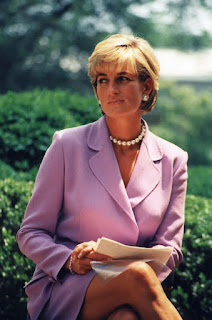


 Posts
Posts


