
The final part: the Best of SNL--Part 2...
14. Canteen Boy (1994)
Criticized for being too raunchy and controversial for suggesting pedophilia, Alec Baldwin's role was as a creepy Boy Scout Scoutmaster attempting to seduce his young Scout, Canteen Boy, played by Adam Sandler. After being teased by the fellow Scouts, the Scoutmaster, played by Baldwin, insisted that the boys leave Canteen Boy alone and that they return to their tents to sleep. After Canteen Boy insisted that their taunts were simply "sticks and stones," the Scoutmaster's arm was thrust around Canteen Boy's shoulder, and there was an immediate recognition of the situation. Ripping off his shirt, the Scoutmaster claimed--"Whoops, my shirt fell off." Wine spilled on Canteen Boy's sleeping bag, so it was insisted that Canteen Boy share the sleeping bag of the Scout Master, then to rub bug repellent on his chest (though Canteen Boy points out that it is February and the bugs must have hibernated). The skit was controversial enough to persuade SNL to clearly state the next time that Canteen Boy was in fact a twenty-seven-year-old man.
13. Coffee Talk (1992)
Though heavy on the Jewish stereotypes, "Coffee Talk with Paul Baldwin" and later "Coffee Talk with Linda Richman" (both starring Mike Myers in the title role), featured a number of traits, such as a passion for Barbara Streisand and historical topics, like "The New Deal was neither new nor a deal--discuss" and "the Progressive Era was neither progressive nor an era--discuss." The most memorable moment was when Streisand herself made an unexpected appearance. Myers was joined by guests Roseanne Barr and Madonna (both also as stereotypical Jewish women--large, hard hair and periodically licking the teeth). The three of them (two actually, for Roseanne's character was a bit distracted and "gassy") were disappointed to the point of crying in lieu of the multiple nomination's Streisand's film "The Prince of Tides" received--the disappointment came in the omission of a Best Director nomination for Streisand. They became chocked up--or
feklempt--but were disrupted by Roseanne's story of a man whose gallbladder exploded. The skit continued. A caller mentioned it would be a good idea for Barbara to do a duet with Madonna, to which Madonna's character, though expectedly, dismissed it as a bad idea. "She's a tramp--every day with a different boyfriend." Myer's Linda though mentioned that her legs were like "buttah." Finally, they repeated: Barbara's movie was "like buttah" (Madonna), "like buttah" (Myers), "like a big stick-ah buttah" (Barr). Then, unexpectedly, approached Barbara, who mentioned that with all the talk of food, she was getting hungry. The three of them--and the audience--burst into applause. Apparently, only Myers knew of her appearance ahead of time.
12. The Ambiguously Gay Duo (1996)
Always bound to inspire laughter, Robert Smigel's "TV Funhouse" cartoons featured the hysterical "Real Audio," in which dialogue from celebrities (usually politicians) would be animated to create bizarre situations. The real gem from Smigel was his "Ambiguously Gay Duo" of Ace and Gary, a take on the Batman and Robin archetypes. Smigel capitalized on the ambiguous nature that was clearly evident in superhero comics (particularly Batman--keep in mind this was not the seriousness of the 1940s period but instead the "nah-nah-nah-nah-nah Batman! and before the Frank Miller/Tim Burton/Christopher Nolan period), Ace and Gary were two crime-fighting and highly-friendly heroes, animated in the style of cartoons from decades ago. Voiced by Stephen Colbert and Steve Carell (neither were SNL members, but they were members of Second City, "The Dana Carvey Show" and "The Daily Show" together), the two characters happily saved the city from the villainous villains, only to have friend and foe unlike be perplexed by the, well, ambiguity of their actions: patting each other, climbin on each other, and driving a peculiar car. It didn't help the two that their episode titles were also ambiguous, like the one titled "A Hard One to Swallow."
11. Clinton-Bush-Perot Debate of 1992 (1992)
While interesting enough of an actual debate to watch, 1992 featured not only the first televised debate featuring three candidates, but also a hilarious spoof on SNL. While Phil Hartman was Bill Clinton, Dana Carvey played both Perot and Bush, which allowed the audience to see the contrast in his calm, wimpier-John-Wayne voice of Bush with the hyperbolic and staccato annunciation of Perot. The funniest moment was when each was allowed a final response. The camera would zoom in on an opponent, and the audience would see what that candidate was thinking. So when Clinton gave his final thoughts, Bush envisioned the Arkansas governor as a 1960s radical, pot-smoking hippy; when Clinton focused on Bush, he saw an old lady from the World War II-period. Finally, for Perot, both Clinton and Bush saw the Mayor of the Munchkin City.
10. The Ford/Carter Debate of 1976 (1976)
By the time this faux-debate came about in 1976, Chevy Chase had already established Gerald Ford as a bit of a goof, falling down frequently. As it has been stated often, even on the show, Chase looked and talked nothing like Ford, but he capitalized on the fact that Ford had a tendency to fall down and trip. The highlight of this skit was when the moderator, Jane Curtain, began a rather long question for the president. "Mr. President, you said that the Humphrey-Hawkins bill will cost a possible six billion dollars. But isn't it true that the jobs provided by the bill will create up to a hundred and fifty billion dollars in increased production--using Walter Heller's figure that for every one percent unemployed, there is a resulting thirty-nine percent billion dollar loss in GNP. Now, at the present rate of taxation of GNP of thirty-nine percent, doesn't this come to about the same sixty billion dollars in increased revenue?" The whole time Curtain had delivered the question, the camera slowly zoomed in on Chase's face, as the sweat on his forehead became more and more obvious. Finally, he said, "It was my understanding that there would be no math during the debates."
9. Land Shark (1976)
A spoof of "Jaws," with John Williams' score and everything, Land Shark detailed a conning shark (even claiming to be a dolphin) who eventually tricked his victims into opening the door for him (voiced by Chevy Chase) to devour. There is hardly anything to write, but perhaps no skit sums up the absurdity of SNL's humor better than the Land Shark.
8. Julia Childs Cuts Herself (1978)
Fans of the recent Meryl Streep film "Julie & Julia" would have noticed a scene where Amy Adams' character and her boyfriend watch a scene from "Saturday Night Live" with Dan Aykroyd as Julia Childs. The sketch would have sufficed had Aykroyd simply been in drag and a high-pitch Childs-esque voice and manner, but the stakes were raised when the character cut herself while cutting chicken. Aykroyd hardly looked or sounded like Childs (see above regarding Chevy Chase and Gerald Ford), but it was the gratuitous amount of fake blood that sprayed about the set that elevated his performance. The advice to "first, stop the bleeding" was good enough only to spare perhaps a drop of blood. Eric Idle, who hosted the show in the 1970s, said that Aykroyd, for his ability to write and act in these skits, made him the only SNL cast member worthy of being a member of Monty Python.
7. Schweddy Balls (1998)
The skit already started as pure gold--Anna Gasteyer, Moll Shannon and a guest (usually Alec Baldwin) somehow kept a straight face as they lampooned the incredible monotony of the radio voices of NPR. Shannon's character mentioned that she would be asking Santa for some rat traps to help her with the "excessive" rat problem she was having, while Gasteyer's character mentioned that she always leaves out tap water and rice for Kris Kringle (Shannon's could not leave out food due to the excessive rat problem). It only became better when host Alec Baldwin as Pete Schweddy brought out his special food--in the case of the first time, it was his Schweaty Balls. "Tell us about your balls, Pete." With the amount of laughter from the audience, especially the double entente after double entente, it was truly testimony to the ability of these three actors to keep a straight face. "No one can resist my Schweddy Balls."
6. Celebrity Jeopardy (1996-2002)
The absurdity was simple: celebrities playing Jeopardy. The categories were also simple, a bit too simple: months that end in "tober," presidents who are on the one dollar bill, countries between Canada and Mexico, and members of Simon and Garfunkel. Jimmy Fallon usually had great impersonations, as did Norm McDonald as Burt Reynolds, but while Darrell Hammond would usually play different celebrities--from Michael Donohue to John Travolta---once he settled comfortably into an impersonation of an unlikely player named Sean Connery, a Sean Connery who constantly annoyed the host Alex Trebek (Will Ferrell), did the skit really take off. Connery usually would challenge Trebek's authority, and Trebek desperately tried to keep his composure as he was dealing with idiots. What seemed to annoy Trebek the most (in addition to the Bond-like quips Connery threw at them) was his sophomoric, probably-intentional ability to incorrectly pronounce the categories (like "anal bum cover" instead of "album cover"). There were also accusations that he slept with Trebek's mother. Another thing that seemed to make this skit work was the existence of videos on the internet of the actual Trebek being rather annoyed (Trebek himself made a cameo during one of these sketches). Supposedly, according to Macdonald, the skit was created only for him to do his Burt Reynolds impersonation, and Reynolds actually enjoyed the skit, so much that the show planned for Reynolds to crash the set, punch Macdonald, and finish playing the game with answers even dumber than before (with Macdonald being fired from the show, that never came to be).
5. The Joe Pesci Show (1996)
So many things were magical about "The Joe Pesci Show," chief among them the bizarre idea of Joe Pesci, the actor who portrayed such violent characters in "Goodfellas," "Casino," and "Home Alone" having a talk show. The sketch usually featured the host, Pesci, with a spot-on impersonation from Jim Brewer, and an SNL host (frequent hosts Alec Baldwin or John Goodman, for example) as guest Robert De Niro, and usually climaxed into an angry assault by Pesci and/or De Niro on the guest(s). One highlight was when the actual Pesci and De Niro showed up, in perfect deadpan, and turned the tables. But the greatest moment was when host Jim Carrey (a natural from his days on "In Living Color") appeared as Jimmy Stewart. Hunched over and frequently shifting his jaw in Stewart fashion, barely finishing his poem about a fish he caught but released due to sympathy (a spoof of Stewart's poem to his late-dog on "The Tonight Show"), Carrey was perfect. The skit got better as Pesci's second guest was none other than Jim Carrey (Mark McKinney). McKinney's impersonation was good, but the pricelessness of the situation was the angry look on Carrey/Stewart's face. "Smoke a lot of dope, do ya?" an annoyed Stewart asked. McKinney/Carrey then did an impersonation of Stewart, but was one-upped as Carrey/Stewart slowly rose to his feet to return the impersonation: "I'm Jim Carrey! I'll do anything for a laugh. I need attention twenty four hours a day. Look at me! Look at me!" He then proceeded to imitate a donkey. As expected, Pesci assaulted McKinney/Carrey with a baseball bat, and Carrey/Stewart protested that he did not agree with "gratuitous violence," which provoked Pesci to whack him in the head. But James Stewart, a veteran of World War II, did not go quietly, as he nabbed the bat from Pesci and wreaked havoc on the set.
4. The Katie Couric and Sarah Palin Interview (2008)
Sarah Palin was a good enough joke before SNL took advantage of the situation. Recall that when John McCain picked her as his running mate in August of 2008, SNL had not yet returned for a new season. But everyone noticed Palin as looking remarkably similar to Tina Fey, a former cast member and writer for the show. Not letting a perfect opportunity go to waste, Fey returned to open the next season as Sarah Palin, noting that she could "see Alaska for my house" (which helped define the narrative of Palin). But that skit featured Amy Poehler as Hillary Clinton, and while Poehler's impersonation of Clinton was never really good, it also seemed to distract the skit for the sake of being fair. The next time, however, SNL could not resist but to decimate Palin. The disastrous interviews Palin did with CBS's Katie Couric, in which Palin could not cite a moment of McCain supporting financial regulation while he was a senator (though moments early she said he had a record of it) and where she could not recall which newspapers she read, provided such an opportunity. The perfect moment was Fey/Palin's explanation of the "ill" bailout, using big words like "ultimately" and "deficit" while juxtaposing it somehow with health care reform and "shoring up" the economy and small business and "reining in spending" with a heavy emphasis on "reining." The real painful reality, though, was that, as numerous videos on the internet have demonstrated, Fey's impersonation of Palin seemed to be a word-for-word mimic of what the latter had actually said, confusion and all.
3. Gerald Ford Dead Today (1996)
The idea was perfect: Tom Brokaw (Dana Carvey) of NBC was ready to go on vacation. As a precaution, NBC ordered Brokaw to film any potential stories that might occur while he was away. The hypothetical was tragic--Gerald Ford dead. "Gerald Ford, well he's in good shape." But they wanted to just make sure. Then the other, less-likely hypothetical situations came: being shot (Ford was actually shot at twice in one week), suicide, drug overdose, and my two favorites--eaten by wolves and strangled to death by the corpse of Richard Nixon. Brokaw became angrily skeptical, but was reassured when it was explained that "it happened to Taft."
2. King Tut (1978)
The king of SNL's sophomoric nature was Steve Martin's rendition of a musical homage to Tutankhamen. While starting as what seemed to be a sincere tribute to the late king evolved immediately into a bizarre dance that was perfected by the absurdist behavior that has defined Martin's sense of comedy over the decades. Wildly shaking his arms and bizarrely singing about Tut's consumption of a crocodile and the fact that "he gave his life for tourism," "King Tut" has been a defining moment for "Saturday Night Live."
1. More Cowbell (2000)
I will concede that my number one and number two choices are essentially a tie as I believe that both do the best job at visualizing what "Saturday Night Live" has been these past thirty-five years. In this skit, starring one of SNL's greatest hosts, Christopher Walken, the audience was explained the behind-the-scenes story of the Blue Oyster Cult's "(Don't Fear) The Reaper." What probably was conceived as SNL's explanation for the odd-sounding cowbell in the song, Will Ferell played a long and overbearing (and offended) cowbell player who conflicts with the direction of the cowbell's sound with other band members. It was Walken, as Bruce Dickenson ("yes, the Bruce Dickenson") who insisted that there must be more cowbell. The confrontations increased, but Dickenson demanded more--"I gotta have more cowbell, babe!" Walken has been one of Hollywood and the theatre's best actors for the past thirty years, but it was SNL (and Quentin Tarantino's casting of him in "Pulp Fiction") that introduced the world to a more humorous Walken. He utilized every aspect of that persona in those sketches. Walken has mentioned in interviews that people will randomly approach him and request a bit more cowbell. "Guess what? I got a fever. And the only prescription is more cowbell!" And thus was spoken SNL's immortal line (that, and "live for New York, it's Saturday Night!").
There were of course some that did not make the list but of course deserve recognition. In 1982, Frank Piscopo and Eddie Murphy gave a perfect duet as Frank Sinatra and Stevie Wonder respectively (was that word really needed?). Martin Short and Billy Crystal's characters and sketches were both left out, but both delivered quality performances. A favorite actor of mine, Tim Curry, hosted the show in the early 1980s and performed "the Zucchini song" with suggestive lyrics. Current senator from Minnesota Al Franken had great moments not only as a writer but also as his Stewart Smalley character (Franken's enemies of the right still refer to him as Senator Stewart Smalley). Did you know that Robert Downey, Jr., Anthony Michael Hall, and Ben Stiller were at one point cast members? Or that Sarah Silverman and Conan O'Brien were once writers on the show (the latter was the one who wrote the infamous "penis sketch")? Perhaps it was the biggest crime on my part to have not seriously discussed Gilda Radner's role in the show.
"Saturday Night Live" is, simply put, a remarkably important part of American pop culture and even history. If nothing else, it is the funniest show on television, certainly with regards to longevity and consistency. There were the periods of doubt (notice that not much of the early 1980s is represented? This was the period when producer Lorne Michaels had left the show), but for the past thirty-five years, hearing that "live from New York, it's Saturday night," has been an essential.
SNL, Alec Baldwin, Canteen Boy, Mike Myers, Adam Sandler, Saturday Night Live, Clinton, Bush, Daily Show, Jaws, Jeopardy, Sarah Palin, Joe Pesci, Tina Fey, Steve Martin, Christopher Walken, Tim Curry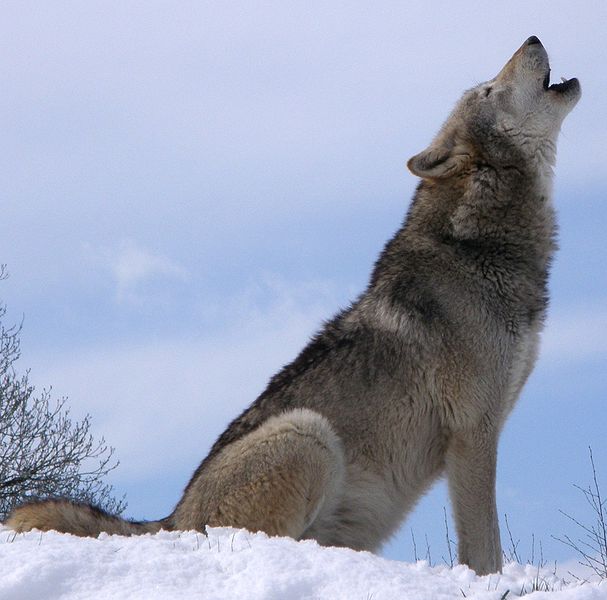 It's my understanding that the perception of the wolf has evolved from two different areas. One (seen in Rome and Japan) viewed the wolf as god-like; in the other (European nations), the wolf is associated with malevolence. Unfortunately, "The Grey" takes the latter view of wolves. At a time when wolves are greatly perceived as being far more dangerous than they are--with occasional attacks in India and the former Soviet nations and only one fatal attack in North America in the past decade--"The Grey" unfairly portrays wolves as malicious man-hunters that can kill by the dozens.


 Posts


