Showing posts with label cinema. Show all posts

Friday, July 12, 2013

This Is the End

"This Is the End" is a parody of disaster/horror/apocalypse films in the sense that there is sort of a formula here to be poked fun at. A group of people are stranded when the world is ending and they have to use their talents and abilities to overcome the uniquely challenging environments.  But with "This Is the End," the apocalypse is in LA, the group of people are spoiled Hollywood actors, and their uniquely challenging environment is James Franco's house. The actors here appear as themselves--they are Jay Baruchel, Seth Rogen, James Franco, Danny McBride, Craig Robinson, and Jonah Hill--though of course it could be argued that in a way they are playing characters. (It would be hard to believe that any of them do half of the things they do in this movie.) Their best plan is to gather all the food (which is the kind that mostly wouldn't sustain someone through an apocalypse) and then they argue about who gets the Milky Way.

They theorize what could be causing the mayhem outside (with the consensus eventually forming around the idea that the Book of Revelations is coming true) but spend most of the time doing what you would expect stoned actors to do: stage sequels to some of their hit movies and play with prop guns. There are unlikable jerks who are destined to die, only here they are actually famous people. Emma Watson (also as herself) shows up with an ax, but things go from bad to worse. In many other films, the filmmakers would assume that simply providing a cameo would provoke laughter; this usually doesn't come true. Here, it does, because the actors are actually given something to do. SPOILER ALERT: Most of the cameos feature performers who die early on; actors are people, too, and they can also be victims to the apocalypse. The actors here subtly poke fun at themselves and each other. Hill, as he is praying, introduces himself to God by reminding Him that he's Jonah Hill, "from 'Moneyball.'" McBride teases Rogen's acting ability in "Green Hornet" and then assures them that the Green Goblin (Franco, of course) surely has enough money to help them.  

The film is one of those rare ones that is funny throughout its entirety. Some jokes, as expected, either fall flat or overstay their welcome. For example, I think most will argue that ejaculation is funny. Erotic? Sure. Depressing? At times. But also fairly hysterical. (I'm not the only one who agrees with this, right?) I can't think of many scenes in cinematic history that feature this unique bodily function which don't appeal to our humor. And so McBride and Franco get into a big argument on such a topic, and then it goes on for about another minute. That's not very long, but I think it's fair to say that ejaculation jokes do in fact reach a ceiling (figuratively, of course). Consider the opening monologue between Jay Baruchel and Seth Rogen in a car from the airport. They get into a big argument about eating gluten and whether or not it is healthy and/or necessary. It is reminiscent of that famous discussion about fast food in "Pulp Fiction," so much so that I expected one of them to say something about "gluten with cheese." I thought it was a bad start to the movie, but pretty soon I was wrong. From there, the two smoke weed with a pipe they observe resembles that of Gandolf the Grey's and start mimicking Ian McKellen as if he were a pothead.

This movie is surely one of the funniest experiences I've had at the cinema. The exorcism scene in particular, in which the gang tries to rescue their friend from the grips of Satan, had me practically in tears. To provide further evidence of the lovably sophomoric humor, let me point out that the demon in the movie not only is rather terrifying but also, for no explained reason, incredibly well-endowed--it's hard (no pun intended) not to notice. Spoiler? Hardly, but you should at least have some kind of an idea of the movie you're about to watch. And beyond that, all I can say is that you will very likely laugh a lot.


Thursday, July 11, 2013

The Place Beyond the Pines

"It is the business of the malevolent man to seek to promote what is beneficial to the world and to eliminate what is harmful, and to provide a model for the world.  What benefits he will carry out; what does not benefit men he will leave alone."
-Mozi

Over the pine planes, in Schenectady, New York, is where this story takes place. Avery Cross (Bradley Cooper) is a beat cop and the son of an influential judge. He pursues a criminal, acts in a way that deems him heroic, and, accordingly, should be rewarded with a good outcome. The problem is that his heroic deed is questionable. It leaves him conflicted, and Cooper pulls this off through wordless emotions, not dialogue. Throughout the rest of the film, Cross's outcomes are not necessarily hopeful ones. Director Derek Cianfrance has thought a lot about his "The Place Beyond the Pines," which he claims is inspired by the birth of his son and Jack London's stories.

Even without these thoughts, the film doesn't have to try too hard to capture our attention in its first act. From the first moments we are witness to motorcycle chases and long shots. The first act focuses entirely on Ryan Gosling's side of the story. Gosling is Luke Glanton, a star motorcyclist in need of money to support his family. Unable to find more steady income, he finds that robbing banks suits his unique talents. Pairing up with a local mechanic (Ben Mendelsohn), their plot involves Luke charging into local banks, cursing up a storm, and demanding that the money be stored in his bag.  From there, he darts off on his bike and evades the police. It's a remarkable first act.

The second act is not as sustainable as its predecessor. From here, we see Bradley Cooper as Cross, a young cop with ambition, rising through the ranks and seemingly playing all the right moves. Cooper is very good in this role, and is doing a fine job of continuing his streak after being nominated for a Best Actor Oscar for last year's "Silver Linings Playbook." But the second act is not as sustainable because the story touches on police corruption, something that is not new to cinema goers, most of whom have probably seen "Serpico," "Cop Land," etc. It's true that this is not the main focus of this segment's plot, but it is distracting nonetheless. But then the final forty-five minutes or so of "The Place Beyond the Pines" is when this movie enters its silly season. The story shifts away to the offspring of these two characters, where the idea of consequences is really obvious, but it never makes us want to care. Too often, a movie is really intriguing and entertaining, only to lose its footing as it heads into the final stretch. This is certainly the case with "The Place Beyond the Pines." How I wish we could have had more of Luke and Avery's stories instead of those of the teenagers. If it were not for that final segment, I think this movie had the potential to be one of the year's best.

Ray Liotta's performance as a dirty cop named Deluca has a few genuinely frightening moments that reminded me of his intensity as a performer. There's a Hollywood story alleging that Liotta, in an attempt to convince Martin Scorsese to cast him in "Goodfellas," approached Scorsese one evening. Those around Scorsese thought Liotta was approaching Scorsese to attack him, and that is what sparked Scorsese's interest in him. In one scene, Deluca attempts to lead his crew of corrupted cops into the house of a suspect. She refuses, insisting on the need for a warrant. "You assume I have a warrant," he tells her, "and I'll assume your mother has papers." But the more obvious similarities exist with Ryan Gosling. He's not at the level yet, but his acting here has the image and tenacity of Marlon Brando and James Dean in the 1950s.

Thursday, May 30, 2013

Star Trek Into Darkness

The enemy of my enemy is my friend. This is how Captain Kirk rationalizes working with a terrible foe. Is it logical? Is it safe? A confusing sense of morals and ethics is what drives J.J. Abrams' newest "Star Trek" adventure, "Star Trek Into Darkness," and yet it's still a lot of fun. That's what is most appealing about J.J. Abrams in his role as directing the "Star Trek" films: he understands the delicate balance between action and thought, rarely focusing too much on one or the other. Consider that in one scene Starfleet is attacked by a merciless killer--it's a loud, somewhat intense fight scene with lots of laser blasts. Only moments later, we get an allegorical debate on the ethics of counterterrorism. Most of all, the filmmakers here understand the character-driven nature of the series. The action scenes are all good fun, but the ones that are more lasting are the character scenes.  "Star Wars" fans should rest assured with Abrams directing "Episode VII" next year.

We're more or less on a new adventure here, as Starfleet is attacked by a callous Starfleet officer, John Harrison (Benedict Cumberbatch). Captain James T. Kirk (Chris Pine) is ordered to hunt him down and destroy him. Harrison knows that he can hide in dangerous enemy territory where Starfleet would not dare chase after him, but chase they do. I could be a bit more specific in these details but as expected, the plot is a bit confusing with likely more than one hole in it. Regardless, when I watch space opera of this kind, I'm not necessarily after perfectly comprehensible details. Who cares about details when there's such a terrifying performance by Cumberbatch? Cumberbatch is particularly enjoyable as the villain, with a deep low voice that is haunting; I can only imagine that Pine, Zachary Quinto and others were just a bit frightened on the set. (Though, as an actor, Cumberbatch could probably afford to relax his jaw a bit and tone it down.) Fans will be happy that virtually every character is given something to do instead of simply pressing buttons. Scott (Simon Pegg) conflicts with Kirk about new weapons being brought on board the Enterprise, while Spock (Quinto) continues not so much to struggle with his emotions but to struggle to clarify them to those who do not understand him. Sulu (John Cho) gets to take the helm for some scenes and threatens his enemies not to test him, or else he will unleash the firepower of the Enterprise. (I'm sure George Takei was smiling.) And Pine was good as Kirk in the first one, but here he is really good, perfectly comfortable in his role, striking the right balance of brilliance and arrogance. But I think the best performance is by Peter Weller as the hawkish cold warrior intent on provoking wars with Starfleet's enemies. His constant lectures towards Kirk, not-so-subtly calling him "boy," fuel the disconnect between the two.

Oscar-winner Michael Giacchino's score is haunting, particularly the piano tune that accompanies Harrison and his actions. I'm a harsh critic of CGI, but Abrams and his team at ILM have made visual effects that actually (mostly) looked quite good. They back up half-a-dozen exciting scenes, like the opening chase through a bizarre jungle hued in red or a roller-coaster head-dive through a debris field. And instead of a gratuitous amount of green screens, Karen Manthey provides some really nice, elaborate sets. But one consistent flaw in every Abrams movie is his inability to sustain a film passed the second act; indeed, with "Star Trek Into Darkness," the third act is just as clunky as it is in his other films. Still, he and his writers (Roberto Orci, Alex Kurtzman, and Damon Lindelof, his collaborator on "Lost") put together a nice, albeit somewhat unoriginal story. I'm not a fan of spoilers at all, and it will be delicate not to spoil anything. That being said, there are numerous surprises here, and some of them might cause more eye-rolling than amusement. The writers have enjoyed going further with adjusting the "Star Trek" mythology and flipping everything. Indeed, there are scenes here that mirror scenes in previous "Star Trek" films (again, I won't elaborate on why); I was touched by these scenes, but alas, not as much as the originals. Still, the scenes are clever, as is this movie.  I think I might like it more than its immediate predecessor.

On a personal note, "Star Trek" from 2009 was the last movie I reviewed for the Daily Kent Stater in undergrad.


film, movie, cinema, J.J. Abrams, Chris Pine, Kirk, Spock, Star Trek, Star Wars, Zachary Quinto, Benedict Cumberbatch

Thursday, April 25, 2013

The Amazing Spider-Man

Film critics are told to go into every movie rooting for it to be a smashing good time.  I must confess that I had no such thinking walking into "The Amazing Spider-Man." I suppose I shared the consensus view that there was no need to re-boot the franchise so soon after Sam Raimi's trilogy.  I think, though, that after the negative reaction fans had towards the "Star Wars" prequel trilogy, there has been considerable efforts from filmmakers charged with the task of rebooting franchises to do it justly, and that's why the James Bond, "Planet of the Apes," "Batman" and other reboots have been so successful. Fortunately, Marc Webb's "The Amazing Spider-Man" is another one of these successful reboots.

Andrew Garfield (from "The Social Network") is Peter Parker, the awkward boy Tobey Macguire portrayed in the original trilogy. Here, as Spider-Man (which he finally becomes at almost an hour into the movie), Garfield suffices, but I suspect he needs one more go-around before getting it completely right. He has had a lot of good training from this one, as his co-stars include Rhys Ifans, Sally Field, and Martin Sheen; those three actors are worth the watch of any movie, so to see all three here is a real treat, and they're all in top form, particularly Ifans, who's given a lot of "Dr. Jekyll and Mr. Hyde" moments to have fun with. It's just a shame that we don't only see this portrayal but also Ifans disguised in silly-looking GGI effects. When he's in his full metamorphosis as the Lizard, he looks rather silly (but again, as a sick scientist, he's wonderful). Emma Stone as Gwen Stacy is as likable and funny as she was in "Easy A" and "Zombieland," but unfortunately isn't given much to do here until near the end. Denis Leary also appears as Stacey's strict, traditional "law-and-order" father (who also happens to be the police chief who despises Spider-Man). Finally, Stan Lee, as he always does, has a cameo here, and it probably is the best Stan Lee cameo ever.

But as Peter Parker the teenage high school student, Garfield overdoes the awkwardness, overplaying his nervous stuttering in front of pretty girls. The audience is too smart to believe that Peter could be severely punched in the stomach and face several times and then waltz into class. But still, despite this taunting from a school bully whose behavior is way too unrealistic (and considering what demons high school bullies are, that is saying a lot), the audience is probably willing to suspend its disbelief and cheer when Peter has fun humiliating him in the school gym. That's after he gets his mutant powers, of course. And he gets those powers in a science lab when a spider bites him....oh, what's the point of discussing all the details of the plot? By now, everyone knows it.

And that's a problem Webb's "Spider-Man" has: it hastily checks through the "to-do" list of a "Spider-Man" reboot: Peter gets bullied, he's bitten by a spider, he gets new powers and struggles to understand how to use them. This is a lesson in the subtle differences in listing versus telling.  Webb and his team believe that they need to go through the check list with all this stuff, and these scenes usually are the ones that don't work. Case in point is the CGI scenes with Spider-Man flying around the city or his nemesis, the Lizard destroying the city. They are disguised as "show-me" moments. The parts that really work are the ones where we're being shown something genuine. Not necessarily the visuals, but the human element that makes up the "Spider-Man" mythology. As expected, a lot of this comes from the relationship between Peter and his surrogate father, Ben, played by Sheen. Sheen's character is a simple, working-class man, and yet he has a lifetime of powerful education to pass down to his nephew. But there are other show-me moments, like when Spider-Man must act quickly to save a boy from a burning car. It reminded me of those pictures of the window-washers at hospitals who sometimes dress up as Spider-Man to entertain the children.  It's evidence that the world not only needs heroes, but movies about super heroes.


This review is dedicated to Roger Ebert, who died on Thursday. He wrote the following about "Spider-Man 2," one of his favorite films of 2004: "Now this is what a superhero movie should be...it's a superhero movie for people who don't go to superhero movies, and for those who do, it's the one they've been yearning for." (In his opinion, "The Amazing Spider-Man" was the second best in the series.)


Movies, movies, theater, cinema, watch, watching, watches, view,  see, saw, celluloid, cine, cinema, cinematics, cinematograph, feature, film, flick, motion picture,moving picture, photoplay, picture, screenplay, show, silent*, silver screen, talkie,talking picture, videotape, Spiderman, Spider-Man, Spider Man, Martin Sheen, Andrew Garfield, Batman, James Bond, Planet of the Apes, Social Network, Emma Stone, amazing, lizard, rhys ifans, roger ebert

Wednesday, April 24, 2013

Afghan Star

Havana Marking's "Afghan Star," the winner of the 2009 Best Director and Audience Award at the Sundance Film Festival, is perhaps the most interesting look at a country we should, but probably don't, know a lot about. As the title suggests, this is a documentary about Afghanistan. Not about the current and never-ending war there, but, again as the title hints, a documentary regarding the "American Idol"-style television contest, "Afghan Star." To say this show is dangerous for the performers is an understatement, particularly for the female ones. One of them in particular, after she is voted off the show, strips her hair of its cover and dances around the stage for one last performance. The grin of a Westerner's face would likely fade as we then see the reaction of her countrymen and women. They are not pleased. "Afghanistan is an Islamic country," one of them says. Even though she is eliminated, we see her struggle to get back home and avoid the copious amount of threats from conservatives.

Saudi Arabia is an Islamic country, as well, and yet their definition of what is acceptable for women is radically conservative, even by Afghanistan's terms. Considering also that the world has gone through great liberalization in this past decade, it's stunning to see that in a part of the world where women not only studied with men but also sang rock music to shouting fans is now a region where young girls are shot in the head for attending school. Music is forbidden? Why? I can only tell through brief conversations that conservative Muslims believe music has traditionally been seen as distracting Muslims from their religious duties. But what about video games? Why is permissible to be distracted by them? This is something I will never be able to comprehend. But this is a documentary made for Westerners who would like to get up and one second cheer and another lecture. My reaction was similar to the one I had after watching Alison Klayman's "Ai Weiwei: Never Sorry." While Westerners may be encouraged, what do most folks in Afghanistan and China have to say about these topics?

As hackneyed as it sounds, you're likely to learn a bit more about Afghan culture through this documentary than you do on the nightly news. Consider that the final contestants are from different ethnic groups--Hezara, Pashtun, and Tajik. I suspect the average viewer would be a bit surprised to see, frankly, what these folks look like. Some folks, particularly Westerners, might wonder why they don't look like Arabs, as it seems the rest of the world lumps Islamic countries all together into the Middle East. I remember several years ago, there was an English language learner at our school in the Czech Republic. She was from Kazakhstan (or one of the "-stans," I can't remember which), and a colleague of mine remarked that "she looks so Asian." I think Americans need to be aware that 1) Asia is not simply Japan, China and the Koreas, but a whole host of nations, and 2) we need to rethink how we "see" ethnicity. A person from Afghanistan most likely does not look too similar to a person from Oman. Regardless, there are stories here that need to be told. Those of people who hid radios during the Taliban rule. As the war begins to end (theoretically), it would be interesting and anxiety-inducing to see what kind of stories we can expect in the next documentaries about Afghanistan.


Movies, movies, theater, cinema, watch, watching, watches, view,  see, saw, celluloid, cine, cinema, cinematics, cinematograph, feature, film, flick, motion picture,moving picture, photoplay, picture, screenplay, show, silent*, silver screen, talkie,talking picture, videotape, Afghan, Afghan Star, Islam, controversial, Westerners, documentary, liberal, conservative, 


Wednesday, October 31, 2012

The Best Bond Movies


Happy 50th, James Bond! Here's a quick look at some of the best (and not so good) James Bond movies. (Admittedly, this is not necessarily a thorough review of each and every Bond movie, but more of light reflections.)

24.  Die Another Day
The bad guy is a North Korean with plastic surgery to make him look white and who resides in an ice palace. This is not only the worst Bond movie but also one of the worst movies I've ever seen.

23. Never Say Never Again
The "unofficial" Bond movie. After a lengthy battle in court, Warner Bros. created their version of "Thunderball" and actually brought back Sean Connery. (This was the summer of the "Battle of the Bonds," as Eon productions released the official "Octopussy" with Roger Moore.) While a majority of critics then and now generally praise the movie, I tend to agree with Norman Wilner's opinion that it's "pretty awful" (though it's been years since I've seen it). One fairly unjustifiable aspect that I recall is the way Q in this movie seemed to encourage Bond's debauchery, practically ruining the unique relationship between the two.  

File:Sir Roger Moore Allan Warren.jpg22. The Man With the Golden Gun
"The Man With the Golden Gun" features one of my favorite actors, Christopher Lee (who was a cousin of Bond author Ian Fleming). Unfortunately, he's not in the movie enough to make this movie anything but forgettable.

21. Tomorrow Never Dies
Other than the car, this one is basically skippable.

20. Live and Let Die
Roger Moore's first outing as Bond has some respectable elements to it. For one, some of the characters are interesting--Yaphet Kotto as the villain and Jane Seymour as the Bond girl--and being a fan of the Beatles and blaxploitation films, I like Paul McCartney's theme song and the incorporation of blaxploitation era characteristics. Still, in some respects Moore seemed to be copying Connery and it would take a while before he found his groove.

19. A View to a Kill
While "Live and Let Die" showed us a Roger Moore who didn't quite understand what role he wanted the character to head towards, "A View to a Kill" showed us when an actor gets too old to be Bond. By this point, he was over sixty years old and it was showing. But one awesome aspect of the movie is Christopher Walken as villain Max Zorin. (Seriously--Walken as a Bond villain!)

18. Octopussy
There's a train scene, and I love train scenes ("Mission: Impossible," "Indiana Jones and the Last Crusade," "Back to the Future III, etc."), but it pales in comparison to the excitement and adrenaline of the train scene in the new "Skyfall." Also, there's Bond defusing a bomb dressed as a clown.

17. License to Kill
Timothy Dalton's Bond was famously more brooding than the others, but this time that direction went too far. Here Bond has a merciless look in his face, and the overall style is overly violent. It's true that Bond movies seem to numb our minds to violence in the very way that movies shouldn't, but after half-a-century of almost lampooning violence, perhaps Bond movies should get a pass.

16. Thunderball
"Thunderball" is a favorite among many, but for me, I've never seen what was no great about this movie. Personally, I only really remember the villain's eye patch, but do I specifically remember the villain, or that Robert Wagner spoofed him in "Austin Powers"?

15. Moonraker
"Moonraker" was infamously made during the science fiction craze of the late 1970s. With "Star Wars," "Star Trek: The Motion Picture," "Close Encounters of the Third Kind" and "Alien," it's not surprising that the studio wanted Bond in space. Surprisingly, however, this is a rather enjoyable Bond film (if one skips the actual scenes in space). It plays like a traditional Bond film, with clever ways of getting the henchmen ("missing" the birds during a round of hunting but getting the bad guy) and Shirely Bassey's song is hypnotic and memorable. Unfortunately, the space scenes really do hurt the movie, especially with the laser gun fight outside the space ship.

14. Diamonds Are Forever
With Connery back (thanks to a million-dollar paycheck), I think "Diamonds Are Forever" is one of the more underrated Bond movies, showing audiences that Bond could survive in the 1970s and beyond. It's a bit on the simplistic side, but more often than not, we're not looking for sociopsychological subtexts or philosophical debates with Bond outings (though "Bond and Philosophy: Questions Are Forever" is an interesting read).

13.  Quantum of Solace
Marc Forster's "Quantum of Solace" is another one of the most underrated Bond movies. It's not perfect, and starts to shift back into that formulaic, box-checking approach that recent Bond movies have tried to avoid, but it's still an enjoyable (and surprisingly short) Bond film. One aspect that I didn't enjoy was that the fight scenes had become a bit too intense and headache-inducing; when I reviewed the movie for my university's newspaper as an undergraduate student, I titled my article "The Bond Identity," to draw attention to the filmmakers taking the wrong inspiration (from the "Borne" series).

File:Desmond Llewelyn.jpg12. The World Is Not Enough
Perhaps one of the reasons I like "The World Is Not Enough" so much is because at least half of the Brosnan-as-Bond movies were rather disappointing. This movie is mostly a step in the right direction. The opening chase is one of the series' most exciting and there are mostly enjoyable moments throughout the movie. It also features the final appearance as Desmond Llewelyn as Q (he died later that year) and he gives Bond some important advice before he departs, and it's advice that, wrongly or rightly, I have applied to my teaching:

Q: "I've always tried to teach you two things. First, never let them see you bleed."

Bond: "And the second?"

Q: "Always have an escape plan."

(Click here for a moving tribute to Llewelyn.)

11. Dr. No
Some might not recognize "Dr. No" as a Bond movie: there's no opening theme song, no Q branch, etc. But it did set a precedent for some essentials: hot Bond girls (this one iconically played by Ursula Andress), and Bond's introduction as "Bond, James Bond" (and Connery's is still one of the coolest, and one of the reasons Connery remains to many the coolest Bond). Still, it's at times too simple. (It should be noted, however, that this was largely due to budget concerns; the filmmakers chose Fleming's "Dr. No" over the first novel, "Casino Royale," because the main location of "Dr. No" was in Jamaica, while "Casino Royale" took place in a variety of countries). This movie also showed us that Bond can sing (please ignore the German).

(There's some interesting trivia on the movie and subsequent Connery-as-Bond movies found here.)  

10. You Only Live Twice
Some might argue that the attention to Bond gadgets (which is a positive or a negative, depending on your perspective) can find its augmentation beginning here; there is, after all, a jet pack. But there's also a terrific theme song from Nancy Sinatra, beautiful locations in Japan, and an entirely iconic villain; so iconic, that it is probably more likely that thanks to Mike Myers, we know him as Dr. Evil instead of Ernst Blofeld (played here by Donald Pleasence).

9. For Your Eyes Only
"For Your Eyes Only" is close to being the best Roger Moore Bond movie. One appealing aspect is its authoritative arrogance; what I mean by that can be found in its opening moments. Bond battles what's credited as the "bald man in a wheelchair." Clearly supposed to be Blofeld, Bond's main nemesis in many of the earlier films, the filmmakers couldn't refer to him as such because of the legal battles regarding "Never Say Never Again." The result? Bond kills off Blofeld once and for all in the very first moments. It was a nice, succinct way of saying, "Screw you. We don't need Blofeld. We can still make good Bond movies without him." It was also the first Bond film directed by John Glen, who argued (rightfully so) that Bond, after going into space, needed to get back to the basics. Here, our villain is not found on a space ship, but in various locations across the globe; he is played by Julian Glover, who has also appeared in the "Star Wars," "Harry Potter" and "Indiana Jones" series (also as antagonists). (Supposedly, Glover was once considered for the role of James Bond.)    

8. From Russia With Love
For many (including Sean Connery), "From Russia With Love" is the best Bond film. Despite being a bit slower than its predecessor and successors, it still serves as one of the few Bond films where the character doesn't rely so much on gadgets and fist-fighting. Bond has been best when his villain is effective, and here Robert Shaw is perfect as an incredibly-chiseled Russian. The BFI points out that "From Russia With Love" had an "intelligent script that retained the substance of Ian Fleming's novel while toning down the overt Cold War politics." This was a brave move on the filmmakers part, especially because, as the BFI mentions, the movie was released only a year after the Cuban Missile Crisis. Incidentally, the novel was one of President Kennedy's favorite books and supposedly it was the last film he saw before he was assassinated. 

7. Skyfall
"Skyfall" deserves the attention it has been receiving. It's not on the same level as "Casino Royale," but considering that I enjoyed "Skyfall" so much, and I think that "Casino Royale" was one of the best films of 2006 and also think that "Quantum of Solace" is underrated, it can be concluded that Craig has had a good run as Bond so far. Not only does it also feature an enjoyable and somewhat haunting performance by Oscar-winner Javier Bardem, but Ralph Fiennes and Albert Finney have also joined and are both great in their roles. And this is certainly the most beautiful Bond movie ever created, with absolutely gorgeous cinematography of scenes in Shanghai, Macau, Istanbul and Scotland; the work of Roger Deakins is worthy of an Oscar nomination. Director Sam Mendes doesn't waste his time or ours with gratuitous amounts of CGI. When he does, it's unfortunate--there's a somewhat silly moment with a dragon, and a character's fall appears to be computerized as opposed to what looked more like an impressive stunt fall seen in the trailers.

The book on Bond and philosophy I referenced earlier contains a chapter on the character as Plato's guardian archetype. There's an interesting conversation from the Guardian about Plato's idea of a just character. According to a philosophy scholar in the interview, Plato argued that an individual needs to be in control not only of his desires but also needs to be a man of wisdom. Undoubtedly Bond is a spirited individual--all the Bond films have contained some sort of romantic one-night stand. But he is also a wise one. Consider that he finally defeats Oddjob in "Goldfinger" not by destroying him with his high-tech car but by using his head. These Plato of a just individual, which Bond arguably is and arguably isn't, are explored in "Skyfall." When he is asked by a psychologist to respond to the word "murder," Bond responds with "employment." So there's a complexity in the film that often isn't seen in the Bond movies, and for once there's a villain who doesn't just want to take over the world. There's also clever references to former Bond moments, and the ending is quite fitting.    

6. On Her Majesty's Secret Service
This was the first non-Connery Bond film, and the reception at the time was quite critical. Audiences were not ready to see Connery part from the role, and especially due to the love story involved, audiences took out their anger on George Lazenby. Fortunately, reflective reviews have been a bit more positive, though some have argued that the film would have been better with Connery instead of Lazenby. I don't agree. While I like Connery as much as the next guy, I sympathize with his desire to get away from the role. And I especially sympathize with Lazenby; he has claimed in interviews that he was convinced by his agent that now that he had had a Bond movie under his belt, he would receive countless calls from Hollywood. This is not how it would turn out, and Lazenby really hasn't made a movie since. It's quite sad, because I truly believe he was good in the role. The amount of sympathy I felt towards Bond, the ultimate bachelor, in this movie still surprises me, and Lazenby expresses a certain amount of vulnerability that I'm not sure some of the other Bond actors could pull off. Still, many don't see it that way. Even fellow Bond Pierce Brosnan once referred to Lazenby as "poor George."


5. The Living Daylights
File:Timothy Dalton 1987.jpg
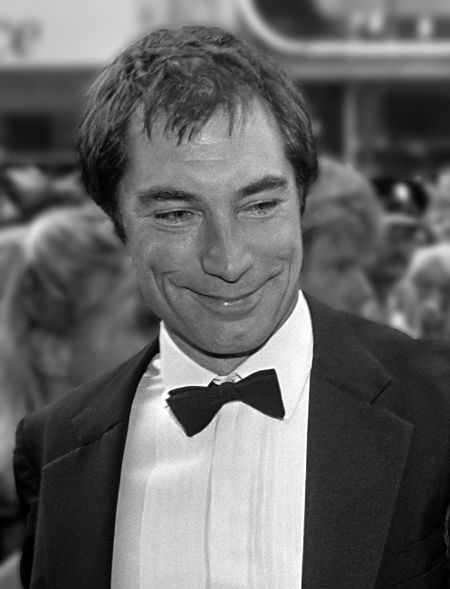
Timothy Dalton was offered the role as a replacement for Sean Connery, but considered himself too young. And by the time there was a need for a new Bond after the Moore years, Dalton was busy, paving the way for none other than Pierce Brosnan to take over the role. But when fans of Brosnan's series "Remington Steele" found out that Brosnan would be Bond, the show was scheduled for another season, leaving Brosnan without the role he so badly wanted. By this point, Dalton was available. This Bond movie is most interesting, I think, because of what Rita Kempley recognized as Bond now being consciously aware of sexually transmitted diseases in the late 1980s so much that he "explores monogamy and probably practices safe sex." This wasn't a Bond who would pat a girl on the rear end with a twinkle in his eye. That being said, there was a scene that was particularly disturbing in which Bond rushes in a woman's hotel room, violently rips off her shirt to expose her to the chasing henchmen, who is then obviously distracted enough for Bond to get him. James Bond was not a feminist yet (and alas, probably never will be one).

But as a Bond, I still think Dalton was incredibly good in the role. His take focused on the written material from Ian Fleming, so naturally his Bond was a bit more humorless than some of his predecessors. (Incidentally, the individuals who complain about Dalton's more brooding, serious acting usually are the ones who praise Daniel Craig; Dalton was obviously way ahead of his time.)

4. The Spy Who Loved Me
This Bond movie was made at a time when Roger Moore seemed to be having difficulty in the role after rather unsuccessful attempts in "Live and Let Die" and "The Man With the Golden Gun." The third time was the charm, as Moore (who admitted that he thought the role of Bond was more worthy of humor than machoism) finally found the rhythm he was searching fall. (Moore has much justification for playing it that way: as he put it, who would ever believe that in reality, James Bond would actually be a good spy?) It also features the first appearance of henchman Jaws, an exciting ski jump, and one of the best Bond songs of all time: Carly Simon's Oscar-nominated "Nobody Does It Better" (written by Marvin Hamlisch and Carole Bayer Sager).

3. Casino Royale
Like his previous task with "GoldenEye," Martin Campbell was hired as director to resurrect the Bond franchise. After the dismal "Die Another Day," it had been about four years with no Bond. There were numerous A-list actors considered for James Bond, but there was a bit of a collective gasp when it was announced that a fairly-unknown Daniel Craig would take over. Craig had effective supporting roles in Steven Spielberg's "Munich" and Sam Mendes' "Road to Perdition" (as well as a more embarrassing movie called "A Kid in King Arthur's Court"). He was and is not conventionally handsome like his predecessors, but critics were so outraged that they petitioned against him being cast, with some actually showing a video that digitally morphed his face into that of an ape. (Some former Bonds had to come to his rescue with praise.) But when "Casino Royale" debuted in 2006, Craig won the approval of fans and critics alike. Despite its length, "Casino Royale" remains one of the best, and it showed that the formula can be tweaked a bit without rocking the boat too much. Virtually every aspect here works wonderfully, and Campbell and company made a wise and smart choice by keeping Judi Dench as M, playing with continuity a bit, but it certainly proved to be the correct choice.

2. GoldenEye
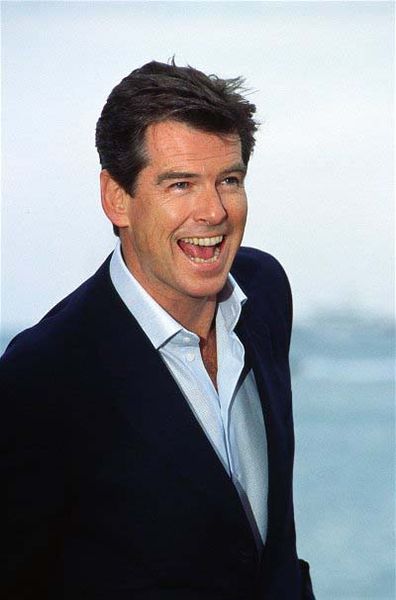
File:PierceBrosnan(CannesPhotoCall).jpgBen Evans infamously pointed out that "GoldenEye" was his favorite because he played the video game as a child. While I undoubtedly also spent much of my youth playing the game, I cannot see how nostalgia alone can serve as the most convincing argument for it. Still, "GoldenEye" comes quite close to being the best for several reasons. For one, Pierce Brosnan is incredibly effective in his first outing as Bond (and it's a sincere pity that his following Bond films were mediocre at best). He seemed to strike an effective balance between the machoism of the Connery era and the lax humor of the Moore era. Additionally, the film succeeded at accomplishing one of its most challenging goals: making Bond relevant in the post-Cold War era. There's still some bad guys with Russian accents, but we see Bond in a graveyard of former Soviet statues. Bond is, as M (Judi Dench) criticizes, a "relic of the Cold War." The Cold War was over, but James Bond wasn't.  


1. Goldfinger
Goldfinger is usually considered the greatest probably because it essentially set the standard for the following films. Unlike its two predecessors, there is an opening moment (unrelated to the overall plot), a theme song, a fancy car that can do anything, and a villain who at times is more interesting than our hero. But it's not simply setting a standard that makes it so great. John Barry's score is probably his best as the Bond composer. The villain, Ausric Goldfinger (Gert Frobe) isn't simply a two-dimensional caricature but an antagonist of haunting charm. How terrifying it is as he practically giggles as Bond is about to be split in half--quite slowly--by a gold-cutting laser (and from the waste-up, no less). "You expect me to talk?" Bond says, probably knowing that his rhetoric isn't working. "No, Mr. Bond," Goldfinger replies. "I expect you to die." Any other actor probably would have lowered the intonation of "die" to make it sound conventionally frightening, but Frobe was rather clever in rising the intonation to taunt and tease Bond. I could go and on about what makes this the best, but I suspect many have already heard what's so terrific about it: its car, its song, etc. But I think the best argument it has is that not only is there an exciting car chase, beautiful scenes in Europe, and a villain who can (almost) match Bond, but consider arguably its best scene: a tense golf match between Bond and Goldfinger. "Goldfinger" doesn't have to rely on the expected elements of what makes a Bond movie great; it has those, but more, and in this case, it's as simple as a golf match.

Movies, movies, theater, cinema, watch, watching, watches, view,  see, saw, cinema,  film, flick, motion picture, Bond, James Bond, Sean Connery, Pierce Brosnan, Daniel Craig, Skyfall, GoldenEye, Casino Royale



Friday, August 3, 2012

The Dark Knight Rises

It occurred to me recently that Christopher Nolan's Batman films are mostly about fear. They explore the fears not only of everyday citizens but also of a man most of us likely thought was never scared: the Dark Knight. Batman probably follows the advice to never let anyone see him bleed, but we see his premonition that perhaps one day he won't be able to prevent terrible things from happening. There are some really scary, terrible things in our world. A recent Gallup poll found that the things Americans fear the most are terrorist attacks, spiders, death, being a failure, war, heights, criminal or gang violence, being alone, the future, and nuclear war. All of these (except spiders and to a lesser extent heights) are featured prominently in Nolan's "The Dark Knight Rises," his final installment of his Batman trilogy.

Years after defeating the Joker and Two-Face (while keeping the true identity of Harvey Dent secret), Batman has left Gotham largely in peace. The Dent Act has kept police officers on the streets, and there is no need for Batman. Bruce Wayne is still injured from previous events, and largely remains a recluse, with hardly anything to do in the world, certainly not protect Gotham.  

But then Bane enters. He is played by Tom Hardy, as chiseled and intimidating as he was in last year's "Warrior." Bane's main goal seems to be to give the power of Gotham "back to the people." But democracy without rules isn't a democracy, it's anarchy, and this is perfect for Bane. He plans on getting his hands on a nuclear bomb and doing a whole lot more to severely disrupt the order of things. Batman is hardly a match for Bane's strength, and Bane seems to enjoy taunting him. "Oh, you think darkness is your ally," he mocks. "You merely adopted the dark. I was born in it, modeled by it...The shadows betray you because they belong to me." (This is Shakespeare compared to the last time we saw Bane, in the dismal 1997 film "Batman and Robin.") How haunting he sounds as he instructs Bruce Wayne that once Gotham is ashes, only then does he have Bane's permission to die. But it's not simply Bane and his malicious army Batman has to worry about--Selina Kyle, better known as Catwoman (Anne Hathaway), is causing quite a bit of mischief as well.  

Nolan is a director who knows his visuals. The opening sequence is a reminder of his talent for unusual, acrobatic stunts, and he seems more prone to use minimalist makeup and a lack of green suits for his characters (which certainly makes him part of a minority among directors). When he does use visual effects, he convinces the audience that every effort was taken to make it look as realistic as possible. One of the previews before the movie was for Sam Raimi's "Oz: The Great and Powerful." The movie looks like it will be filled with computer-generated effects. I was reminded of the visuals of "The Wizard of Oz" from 1939 (the same year as the first "Bat-man" comic) and I thought to myself that while I basically know that Raimi and his team used CGI for the effects, decades later I still don't know how the effects were made for "The Wizard of Oz" and yet they look so much better. The feeling I get from "The Wizard of Oz" is the feeling I get when I watch a Christopher Nolan movie; I'm so amazed at the attention to detail, and his appreciation of visual imagery and his shunning of lazy film making.
 
There are some flaws, of course. Do we need all of these characters? Michael Caine as Alfred, Gary Oldman as Commissioner Gordon, and Morgan Freeman as Lucious Fox are all back, but why have Matthew Modine here as an ambitious cop? What purpose does Marion Cotillard's character really have here?  I'm as big a fan of Joseph Gordon-Levitt as anyone, but what is he doing here?  (My question was answered at the end of the film, and I had mixed feelings about it.) There's a henchman who kind of looks like Willem Dafoe, and I was more interested in him than I was in numerous other characters. The Catwoman scenes are nice, but also are unnecessary. Additionally, this might be the most confusing Batman movie ever. There's something about the stock market and something else about a congressman or something like that. Three hours is a lot to ask for from an audience, and "The Dark Knight Rises" is unjustifiably long, overly ambitious, and increasingly clunky as it moves along. My reaction to "Batman Begins" was excitement that Batman was back; my reaction to "The Dark Knight" was excitement because I recognized that I had just seen a masterpiece. My reaction to "The Dark Knight Rises" was a bizarre sense of being simultaneously overwhelmed and underwhelmed, though ultimately feeling that it was efficient and satisfying.

Likewise, I had mixed feelings about Tom Hardy as Bane.  I admired his physical force, his performance that relies heavily on his voice and eyes, and the thought he likely put behind it.  Still, my reaction to his peculiar voice was similar to my reaction towards Bale's voice as Batman.  At times it works perfectly, and at times it sounds utterly ridiculous.  

At times I was so bored with the movie that I began to compare it to the previous Batman movies by Tim Burton; I still believe his "Batman" from 1989 is the superior one, as I have a preference towards fantastical stories and prefer it to the grittier Nolan versions. Still, one cannot deny Nolan's talent or understate our appreciation for him resurrecting what was surely a dead franchise. Beyond saving it, he brought it back with intelligence and force. Nolan toys with our emotions, as is the case with the scene where Bane and his crew shoot up Wall Street; Nolan shows us the criminality and horror of such weaponry and visualizes the chaos of terrorism.  

Batman has been such an important part of Americana. Originally meant to be a complement to the pride and patriotism (and frankly, lack of realism) of Superman, Batman, particularly Nolan's version of him, has intrigued Americans as the darker, more psychologically and sociologically interesting of the two, and indeed of any American character. Britain recently has shown us a lot of its pride with the Olympics, and who can blame them? After all, they have Bond, the Beatles, and Mr. Bean.  But America has and always will have Batman.


Movies, movies, theater, cinema, watch, watching, watches, view,  see, saw, cinema,  film, flick, motion picture, Dark Knight Rises, Bane, Christian Bale, Christopher Nolan, Batman, Anne Hatheway 

Saturday, June 23, 2012

Prometheus

"Why should the thirst for knowledge be aroused only to be disappointed and punished...like a second Prometheus, I will endure this and worse..."
-Edwin Abbott Abbott

Ridley Scott's "Alien" is famously about a group of "truckers in space" who, out of contractual obligations, must investigate an unidentified object deep in space, where no one can hear you scream. Their ship becomes a haunted house, as a chest-bursting alien hunts them down. Here, in Scott's prequel "Prometheus," there is no economic reality but instead a thirst for knowledge and the reminder that curiosity kills. Its scientist, Elizabeth Shaw (Noomi Rapace), and her fellow scientist and lover Charlie Holloway (Logan Marshall-Green) believe they have discovered an invitation from an alien species on a far away planet. These aren't simply aliens, but in fact some kind of scientific creators of human beings. Their project is funded by an aging Peter Weyland (Guy Pearce), and their crew features a groovy yet hypothesis-providing captain (Idris Elba) and the supervisor of the operation, Meredith Vickers (Charlize Theron), a stern, by-the-book woman, as well as an android (Michael Fassbender), practically in control of everything.

I couldn't help but constantly compare this movie to "Alien," as I should have, and compared to "Alien" it disappoints. Some might argue that it would be unfair to compare the two, considering that living up to the legacy of "Alien" is too difficult a task. But many find James Cameron's "Aliens" to be superior to its predecessor, so the comparison is fair. Whereas "Alien" is one of the most visually stunning films of all time, "Prometheus" often is a mess, overboard in its computer generated imagery, looking like a cheap computer game and not utilizing its impressive sets enough. While "Alien" features one of the greatest casts in cinematic history, only Fassbender provides a comparable performance.

But is "Prometheus" a bad film? Not really. It has its moments and indeed gets better as it goes. It prefers, for better or (more often) for worse, to tackle bigger questions than the conventional horror approach of "Alien." Here in "Prometheus" there are questions on the origin of humans and end of times. Some have complained that there are too many questions left unanswered, but remember that one of the screenwriters is Damon Lindelof, a creator of and screenwriter for "Lost," a show famous/infamous for not revealing many answers. But the questions are unnecessary, as is the teasing of its audience as it hops from enigma to enigma. There are strange holograms. One of the crew members is poisoned. Another is somehow impregnated with some sort of alien; she figures out how to get a machine to perform a Cesarean surgery on her...the absurdities continue.

But as mentioned before, Fassbender is terrific in the film. His character is David, the film's android, and is impossible to ignore, simultaneously serving as an intelligence compass for the crew and yet having a cruel lack of emotion. The only times he does seem to emote are when he either is jealous that he's "not a real boy" or when his fierce loyalty to his master compromises the safety of others.  He playfully apologizes as he seemingly is aware that his actions are making the situations more dangerous. One can find obvious influences from "2001: A Spacey Odyssey," "Lawrence of Arabia" (which David studies), and one would imagine the previous "Alien" films, but Fassbender has stated that he avoided watching those. But other than this, there is not too much else to write about, and it unfortunately feels like a missed opportunity. There are talks of a sequel, but for better or worse, it seems like "Prometheus" should be the final installment and serve as the "Godfather Part III" of the series.


Alien, Prometheus, Ridley Scott, James Cameron, Michael Fassbender, Movies, movies, theater, cinema, watch, watching, watches, view,  see, saw, cinema,  film, flick, motion picture

Saturday, May 19, 2012

Ferngully: The Last Rainforest

"Ferngully: The Last Rainforest" was released in an era of "Captain Planet" and "The Reading Rainbow," among other shows and films serving the dual purpose of entertaining and educating the generation soon-to-be-called the Millennials. "Ferngully" is, as the title suggests, an environmentally-themed movie, and yet despite the famous film's message, Generation Millennial seems to be stuck between not buying cars and overracting to the banning of DHMO. But enough about that.  There's more to the movie than just the environment, as "Ferngully" serves as sort of a nostalgic trophy for the Millennials (and how could it not--it even has a song by Raffi.)  

Samantha Mathis provides the voice of Crysta, a fairy bored of the stories of humans destroying the last rainforest and instead desperately wanting to see an actual human (though the stories she is told say that humans no longer exist). Her wish finally comes true when she encounters humans; one of them is a young boy named Zak (Jonathan Ward), spray-painting away at the trees ready to be cut down. To save his life from a falling tree (which he helped cut), Crysta shrinks him, but now must make things right and send him back again. This being the case, it seems that the two of them fancy each other; even though he's a human and she's a fairy, he tries to teach her some of the great American slang the 80s and 90s added to our lexicon, such as "bodacious babe" (wasn't funny then; not funny now). The chemistry isn't going well, particularly because Zak is responsible for cutting down her home. But he's a city boy, and while it doesn't take him too long to comprehend the fact that he has been shrunk to the size of a bug and is talking to fairies, he has a harder time understanding the need to protect the environment. "How can you live without trees?" she asks him.  That's a good question for all of us as we watch a movie like this. Reading Al Gore's groundbreaking "Earth in the Balance," one gets a sense of alarm, that humans should shake off their apathetic laziness and turn off the air conditioning, get rid of the car, and plant a tree. Except that book was written in 1992, the same year that "Ferngully" was released, and so his scenes of fishing boats forever trapped in a vast ocean of sand are only becoming more prevalent.  (Incidentally, 1992 was also the year Gore was elected vice-president.)

With that in mind, some will say that this kind of environmental "propaganda" has no place for children. Perhaps then, the movie had and will have a limited audience. After all, this is a cartoon about tree-hugging fairies who don't have jobs--not exactly the things that make conservatives happy. But as entertainment, it gets much better as it goes, despite a rough start. The exposition is a bit silly, but then again, most mythology stories are. In the early scenes, its animation is too often not as ambitious as that seen around the same time from Disney. But at times it does provide some wonder, particularly the evening scenes when the characters climb through the forest and such.  (This movie is the original "Avatar.")

Unfortunately, it's not particularly humorous, even with Robin Williams, Cheech and Chong.  Robin Williams' character, Batty, a fruit bat who has survived a torturous ordeal under the probing of scientists, is a character way too arbitrary, even for Williams. Eventually, the character becomes more likable and fitting, especially his musical rap scene.  (1992 was also the year Williams dominated in Disney's "Aladdin" as the Genie.)  The villain here is not some lion or evil witch, but greedy human beings. The personification of their economics, though, is Hexxus, some kind of oil demon, controlling the "monster that ate the trees." Tim Curry, the man who gave us Pennywise the Clown, might be at his creepiest in this form, easily morphing his voice from one octave to another as he sings about oil, acid rain, and capitalism. Curry has that frightening devilishness he famously displayed in "The Rocky Horror Picture Show" and is at his best here as the villain.

The climax, featuring the epic battle between Zack and the fairies of Ferngully versus Hexxus and human machinery, lags and wears on bit in an unexciting fashion. But I have to admit ultimately liking the film then and now. On a scale, it falls short of an animated environmentally-themed masterpiece like "Princess Mononoke" but is far better than "Happy Feet." Overall, it's fun, educational, and, as any movie about the environment inevitably is, depressing. But it ends on a hopeful note, and even though "Ferngully: The Last Rainforest" is twenty years old, perhaps the Millennials and other generations will heed its call, particularly the final dedication which also serves somewhat as a warning: "For our children and our children's children."


Movies, movies, theater, cinema, watch, watching, watches, view,  see, saw, cinema,  film, flick, motion picture, FernGully, Tim Curry, Robin Williams, 1992, animated, Cheech and Chong, environment, Hexxus


Friday, April 6, 2012

The Grey

File:Howlsnow.jpgIt's my understanding that the perception of the wolf has evolved from two different areas. One (seen in Rome and Japan) viewed the wolf as god-like; in the other (European nations), the wolf is associated with malevolence. Unfortunately, "The Grey" takes the latter view of wolves. At a time when wolves are greatly perceived as being far more dangerous than they are--with occasional attacks in India and the former Soviet nations and only one fatal attack in North America in the past decade--"The Grey" unfairly portrays wolves as malicious man-hunters that can kill by the dozens.

Fortunately, that was practically all I disliked about it, for "The Grey" is surprisingly suspenseful, ignoring most cliches while providing lots of suspense and thrills. Take a look at its silly trailer and compare it to its practically Hitchcockian way of presenting the situations. These characters are lost in the Alaskan wild, and the blistering cold is the least of their concerns: there be wolves about them, and they are vicious and numerous. Beyond the wolves, there are several ways to die in the wild, not to mention compromising with other lost, angry, scared survivors. The crash scene reminded me a lot about "Lost" with its famous opening crash scene, and then I thought about how in "Lost," while the characters may have been running from smoke monsters, polar bears, and all sorts of stuff, they were still on a tropical island with apparently loads of conditioner and only needed to really worry about the occasional sand in their shoes. Not so in the frozen north, in which the only food you eat is a wild animal you might be able to kill. According to Liam Neeson, the film's star, it was -40 degrees during the filming in British Columbia and the blizzard was not accomplished with CGI effects.

Neeson is John Ottaway, a man hired by oil companies to protect workers from wolves. His wife has left him, and he is suicidal. The call of the wild (literally) changes his mind; he lives another day, to enter the fray and the fight. Now lost in the wilderness with only several other survivors, he more or less is the leader of the group, though there is the expected amount of competition over what to do. Some of the other survivors are played by Dermot Mulroney, Frank Grillo, and Dallas Roberts.
 
There are some additional flaws in the film. There is almost one "oh-come-on" moment after another, with several plot holes involved. Someone kept asking me afterward why they didn't simply stay put near the plane wreckage. But how thrilling would that be? The wolves aren't going to chase them in circles for two hours. Thus, a certain amount of suspension of disbelief is required, and it works in ways similar to other man-versus-wild films like "Jaws." You're frightened of the animals, but you can't hardly blame them for ripping people to shreds. But the film's grittiness and scares almost become gratuitous.

Neeson has been able to successfully reinvent himself numerous times, and now he is undoubtedly the toughest guy in the movies. He has several similar intimidating moments here, at one point threatening to beat a fellow survivor to the point where he will be choking on his own blood and another where he goes head to head with an alpha male wolf. As mentioned, Neeson has noted the terrible filming conditions in merciless cold. One day, according to Neeson, Nonso Anozie, who plays one of the survivors, started to recite Shakespeare at the top of his lungs and the experience happened to warm them. This has made me think of "King Lear." Upon relinquishing his kingdom to his ungrateful daughters, Lear went into a terrible storm. Allegorically, the storm represents the chaos Britain is in because his kingdom is divided. He is insignificant in such circumstances; he is mad. Mad indeed, "mad that thrusts in the tameness of a wolf..."  


Movies, movies, theater, cinema, watch, watching, watches, view,  see, saw, cinema,  film, flick, motion picture, Liam Neeson, The Grey, wolves, wolf, LOST, Jaws 

Thursday, December 16, 2010

The Strangest Movies of the 1970s


El Topo
Alejandro Jodorowsky's Western features a man in black accompanied by a naked child throughout the desert against little people and maimed people and naked women with a background of religious symbolism and drug-induced cinematography. This film, recently released on DVD and once a feature of midnight cinemas, is a better film than his follow-up, the even more psychadelic "Holy Mountain," and has its share of famous fans, from John Lennon to David Lynch. The element of absurdism is admirable and it's not an intolerable film; it's certainly an interesting step further to the left of Serigo Leone's Westerns, and it sure would make John Wayne furious. Still, this is one odd movie.


Arabian Nights
Famed Italian Pier Paolo Pasolini spent over two years in various different countries filming this silly wonder. The third part of his "life trilogy," (the other parts are a more watchable "The Decameron" and "The Cantebury Tales"), there is a nude character--full frontal, guys and gals--about every five minutes or so, and they're usually giggling, rarely acting, and often poorly-dubbed (even in its original Italian). Still, Pasolini somehow managed to get these naked actors to feel comfortable, and it properly prepared him for his next film and his actual masterpiece "Salo: 120 Days of Sodom." Beyond that, "Arabian Nights" is a chaotic, seemingly hastily-made movie that jumps from scene-to-scene with little thought. For further reading/viewing, read here, here and here, and view here (not work appropriate).


Black Samurai
Kierkegaard's "Fear and Tremblin" tells us that absurdism does not necessarily mean what is logically impossible but what is humanly impossible. "Black Samurai" is both. From 1977 (the year of "Star Wars" and "Annie Hall") this was blaxoitation gone far, far wrong. Jim Kelly from "Enter the Dragon" is a badass agent out to get a whiteass bad guy (who simultaenously plays with snakes and worships pagean gods). And Kelly has a pretty cool rocket pack.


There are others, like "Monty Python and the Holy Grail," Martin Scorsese's "The King of Comedy" and "Harold and Maude" which are all absurd in a good way. They are also more widely known and therefore not as relevant for a discussion here. I can't necessarily say if these first three films are recommendable or not. Pasolini was a gifted man and his "Salo" is a haunting film worth the watch for brave viewers; "Arabian Nights" was not. Jodorowosky is an acquired taste and not for everyone. "Black Samurai" might rank as an it's-so-bad-it's-good film. Regardless, they are three of the oddest movies I have ever seen.

Monday, November 8, 2010

A Tribute to Tim Curry


When I was a kid, Tim Curry was in everything. He was the creepy (and by creepy I mean so scary that his fellow cast members avoided him) clown that helped make "It" regarded as the most frightening television miniseries in history. He was singing as a river of destructive oil in "Ferngully: The Last Rainforest". He stole the show from Tom Cruise as a demonic lord in Ridley Scott's "Legend" with hours of Oscar-nominated makeup on him. He was the best part of an all-star cast in "Clue," stumbling his away around a mysterious house with one or several murderers, and the only good part of John Huston's "Annie." He was also hysterical in "Home Alone 2: Lost in New York," as a hotel manager accused by a movie-within-a-movie character of smoochin' with a gangster's brother. He was practically omnipresent.

Before my time, there was of course the film that first made him famous: "The Rocky Horror Picture Show" in 1975. After the successful run in London and Los Angeles as "The Rocky Horror Show," the film version, with Curry as a Dr. Frankenstein-esque character singing and dancing his way around the house/space ship, has obviously become a cult class. It has also been in the news recently: "Glee" dedicated an entire episode to it, and Curry was honored as celebrities, including Evan Rachel Wood, Danny DeVito, George Lopez and Jack Nicholson, recreated the show on the stage for a benefit concert. (It didn't hurt, also, when vintage footage of a younger Russell Crowe performing in the show recently turned up.) "The Rocky Horror Picture Show," a film he once grew sick of due to the passionate (to say the least) response it had with many fans (it is the longest-running movie showing in history), acknowledged in an interview on "Fresh Air" that he recognizes it as a right-of-passage film for many. (One of the film's biggest fans, he claims, was Princess Diana.)

Curry will appear in John Landis's "Burke and Hare," and fellow star Simon Pegg seems thrilled enough that he has posted a picture of the two of them on Twitter. But to suggest that suddenly Curry has rebounded out of nowhere would be an inaccurate way to describe this talented individual. According to IMDb, he has appeared in over two-hundred projects as an actor, eight this year alone. Three of his films ("The Rocky Horror Picture Show," "Clue," and "It") will soon be remade.

File:Tim Curry 01.jpgRoger Ebert wrote in his review of "The Rocky Horror Picture Show," a film he didn't like, that Curry was the most enjoyable cast member to watch because, for one, he was the only one (according to Ebert) who looked like he was having fun. Indeed, Curry seems to be always having fun in his films. He has a taste for the hyperbole, which heightens the enjoyment, whether he's complimenting Sylvester Stallone's daughter's big, round diphthongs in "Oscar," or going toe-to-fin with Kermit the Frog in "Muppet Treasure Island," or butchering a Romanian accent in the guilty-pleasure film "Congo."

Tim Curry has never quite been a main-stream actor. Often he is "the guy from..." or something like that; many of his performances may forever be lost in the Nickelodeon vault of history and time. But many of his films have gained cult film status, such as "Times Square," in which he played a radio show host. The film was not particularly well-reviewed upon its release in 1980, but since has become celebrated by the queer community for its portrayal of young (implied) lesbians. "Clue," likewise, virtually became unknown despite its all-star cast, solid reviews, and famous title. It was only with the popularity of home video and its frequent showing on Comedy Central that it became well-known. Of course, "The Rocky Horror Picture Show" in 1975 was the firm visualization of surreal camp, with its tribute to B-horror and science fiction movies, rock 'n' roll, and transvestism. Curry, likewise, has never really been a leading man, and he has claimed in interviews that he doesn't want to be one. He usually is his best when surrounded by other talented performers.

He has won several awards, like an Emmy in the 1990s for providing the voice of Captain Hook in the animated show "Peter Pan and the Pirates." He has also been nominated for a Tony twice, first as playing the title role in "Amadeus" opposite Ian McKellen in 1980 and again as King Arthur in "Spamalot" in 2005. Still, something even as prestigious as a Golden Globe or even a Hollywood Star has been kept from him. (But he did open the Oscars one year.) In essence, Tim Curry is Hollywood's best kept secret for a quarter-of-a-century.